American depositary receipts in Alibaba fell 1% to $119.84 at 3:40 p.m. New York time. Those of Baidu were down 2.1% at $119.14. BYD’s receipts fell 0.7%.
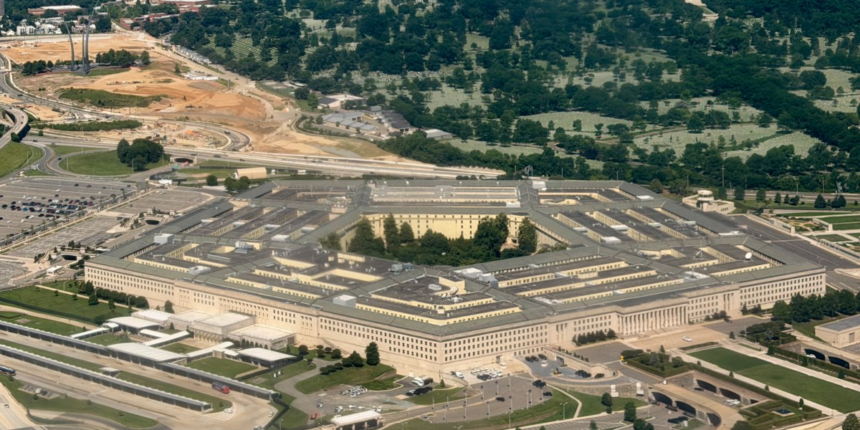
The newest version of the Pentagon’s so-called 1260H list also restored two Chinese memory chipmakers — ChangXin Memory Technologies Inc. and Yangtze Memory Technologies Co. — that had been previously designated by the Pentagon but were removed from the version that briefly appeared in February.
While the list carries few immediate legal repercussions, the Pentagon is increasingly using it to restrict companies’ abilities to contract with the US military or to receive research funding. A 1260H designation also serves as a warning to US investors, and is widely considered a red flag that can precede more punitive trade restrictions.
None of the companies immediately provided comment when contacted by Bloomberg News. Many have previously rejected US claims that they support the Chinese military.
The Chinese embassy in Washington had no immediate comment. Liu Pengyu, an embassy spokesman, said previously that “China urges the United States to immediately correct its wrong practices and provide a fair, just, and non-discriminatory business environment for Chinese companies.”
The list was released less than a month after President Donald Trump met with his Chinese counterpart Xi Jinping in Beijing, where the two leaders discussed some of the sticking points on trade between the world’s two largest economies. Their closely watched summit failed to yield a significant easing in tensions over advanced technology, especially AI.
“The Pentagon’s republished Chinese military companies list serves as a post-summit reality check,” said Craig Singleton, senior China fellow at the Foundation for Defense of Democracies. “The Xi-Trump meeting did not pause competition; it clarified where competition will continue,” said Singleton, who tracks the 1260H designations closely.
In releasing its updated list, the Pentagon said the named entities qualify as “Chinese military companies” operating directly or indirectly in the US based on their alleged activities “providing commercial services, manufacturing, producing, or exporting.”
Bloomberg News reported in May that the Pentagon’s initial decision to remove YMTC and CXMT was the reason the list was quickly withdrawn in February. Trump national security officials thought that removing the chipmakers — especially ahead of the planned meeting between the US and Chinese leaders set at the time for late March — would incorrectly suggest that the US no longer considered them a threat, according to people familiar with the matter.
Immediately after the list’s publication, a senior White House official called the Pentagon to express displeasure that their concerns had been ignored, Bloomberg reported. Defense officials raced to get the list taken down just minutes after it had been posted.
The snafu gave companies a monthslong opportunity to press for further changes via a mix of lobbying and legal strategies. In the end, the version published in June was substantially similar to the version published in February and then withdrawn — except for the reinstatement of the two chipmakers.
Congress first ordered the Defense Department to make a list of Chinese military companies operating in the US in 1999. The Pentagon finally began doing so more than two decades later, after lawmakers and the first Trump administration revived the issue.
Due to China’s “military-civil fusion” policy, under which Beijing mandates private-sector collaboration with the country’s armed forces, the Pentagon could theoretically justify designating almost any Chinese company with a US presence.
The version that was briefly published in February and essentially republished Monday is among the most significant updates in the list’s history, targeting nearly 200 companies — many of them among China’s most prominent.
John McEntee, a former senior Trump White House official who lobbies for Tencent, criticized the company’s continued inclusion on the list.
One remaining point of confusion emerging from the newest update is the addition of China-based TP-Link Technologies Co. Ltd. — which is focused on selling routers to customers in China — rather than US-headquartered TP-Link Systems Inc., which has come under US scrutiny for the possible national security risks posed by its dominance in the market for wireless routers.
To be added to the list, a company must operate directly or indirectly in the US.
“As a U.S.-based company incorporated in California, TP-Link Systems Inc. is not subject to this posting or its associated restrictions,” said a company spokeswoman. She added that TP-Link’s founder and CEO, Jeffrey Chao, lives in California “and is not and never has been a member” of the Chinese Communist Party.