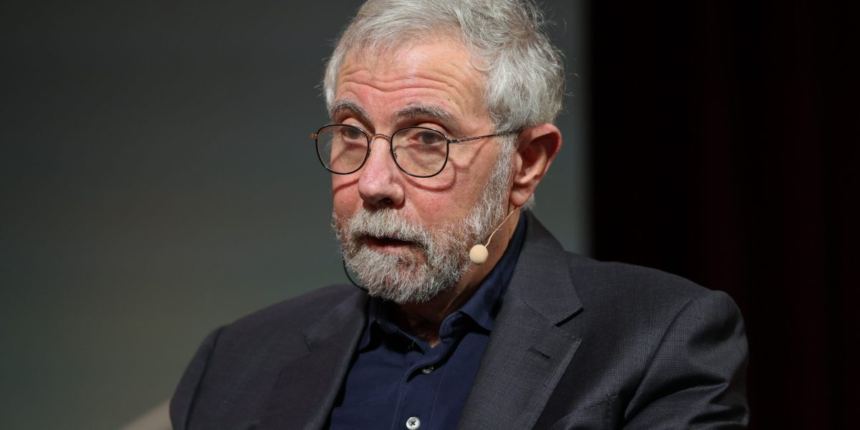
“Less than half of U.S. consumption of petroleum products was gasoline,” Krugman wrote. “Add in soaring costs for fertilizer and feedstocks for plastic, and the surge in gas prices, even though it dominates headlines, is well under half of the economic story.” Those inputs are crucial for everything from the food on your grocery shelves to the shopping bags that carry them.
The impact of rising gas prices isn’t just in the headlines; it’s flashing in giant digits at more than 150,000 gas stations nationwide, where prices have steadily climbed past $4 a gallon. While Trump claims the U.S. isn’t reliant on the Strait of Hormuz, roughly a fifth of the world’s oil and natural gas supply passes through it daily. And so do other resources critical to the American consumer. The U.S. is a top producer of gasoline. But even ignoring the reality of skyrocketing gas prices, a prolonged closure of the Strait of Hormuz could hurt Americans’ pocketbooks in many other ways, according to Krugman.
Even as the U.S. produces more oil than it consumes, it remains tethered to global energy markets where prices are set at the margin. That means disruptions in the Strait of Hormuz ripple through diesel, petrochemicals, and fertilizer markets, disrupting everything from shipping costs to food production.
Diesel prices have climbed by approximately $1.70 per gallon, roughly 70% more than the increase in gas prices. That raises the cost of shipping and doing business, according to Krugman. At the same time, jet fuel prices have climbed, and fertilizer costs have soared because the Middle East is a major producer of the natural gas feedstocks required to manufacture them. The price of urea, a critical component in fertilizer, has spiked as the war disrupts these essential supply chains.
These rising costs are passed on to consumers through the prices of food and goods. And because of it, Krugman said, that puts Trump’s desire for a Fed rate cut further out of reach.
“The diesel/jet fuel/plastics shock will lead, other things equal, to a more hawkish Fed—and an elevated risk of recession,” he wrote.
Trump didn’t make mention of commodities other than oil and gas during his speech. To reassure the country on that end, the president highlighted the U.S.’s dominant role in global oil production. But even with the U.S.’s vast domestic oil industry—and Venezuelan oil and gas reserves, which Trump said the U.S. is discussing receiving “millions of barrels” from—Krugman highlights that there’s no way American families could benefit from any gains in production.
“We don’t have any mechanism in place to capture and redistribute those windfall gains,” he said. “So ordinary U.S. families will bear the full brunt of the global oil shock even though America is a net oil exporter.”