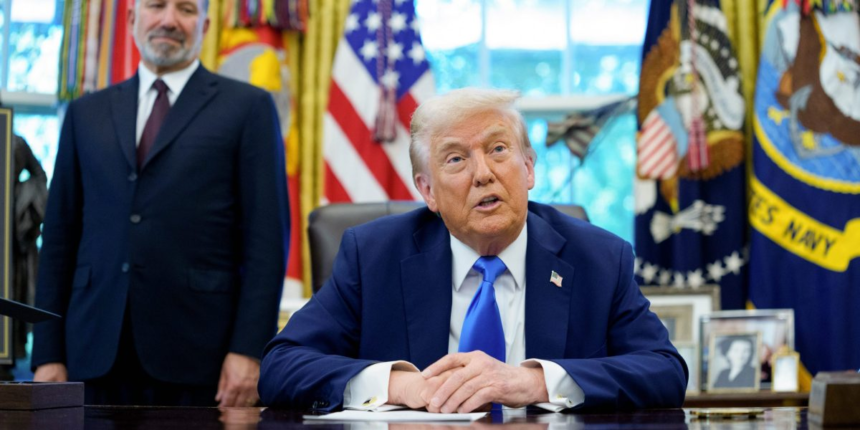
Eight months later, the visa fee has split the tech industry in two. The frontier AI companies that publicly supported the move have sharply increased their foreign-worker filings, even at $100,000 a head—while the Big Tech giants with far larger workforces have pulled back. And on Monday, a federal judge struck the fee down entirely, calling it an unlawful tax.
Nvidia’s certified H-1B applications rose 19% in the first quarter of this year compared with the same period in 2025, according to a Fortune analysis. OpenAI’s more than tripled, and Anthropic went from roughly 10 to nearly 60.
Huang acknowledged that the fee could be prohibitive for some, especially if their employer isn’t covering it.
“You don’t have certain talents, and people have to learn,” he said. “You can’t just say a country is coming in, going to invest $10 billion to build a plant and take people off an unemployment line who haven’t worked in five years, and they’re going to start making their missiles. It doesn’t work that way.”
But on Monday, U.S. District Judge Leo Sorokin in Boston sided with the 20 states that had sued, ruling that the fee amounted to a tax Congress never authorized the president to impose. “The Court finds that the Policy imposes a tax on H-1B petitions without the requisite delegation by Congress,” Sorokin wrote.
The decision deepens a legal split rather than settling it. Sorokin’s ruling—a summary judgment—directly contradicts a separate case in Washington, D.C., where a federal court upheld the fee in a challenge brought by the U.S. Chamber of Commerce, a decision now on appeal. A third suit, filed by religious and labor groups in San Francisco, is still pending. With cases moving through three different appellate circuits, the question looks headed for a higher court—possibly the Supreme Court—even as the fee is set to expire on its own in September 2026.
In the meantime, employers are left guessing whether the $100,000 charge applies to petitions filed today. The administration is expected to appeal.