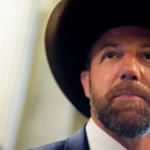
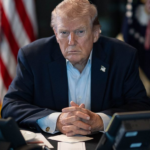
If Ohio Gov. Mike DeWine could turn back time, he would not have signed the law that legalized sports betting in his state.
“Look, we’ve always had gambling, we’re always going to have gambling,” DeWine told The Associated Press last week. “But just the power of these companies and the deep, deep, deep pockets they have to advertise and do everything they can to get someone to place that bet is really different once you have legalization of them.”
His comments reflect a reckoning that’s unfolding across sports and politics as sports betting becomes more ingrained across much of the U.S. The wave of legalization in recent years unleashed a massive industry centered around betting and, more recently, a wave of investigations and arrests tied to allegations of rigged games. It’s a dynamic that DeWine says he doesn’t think lawmakers fully anticipated.
“Ohio shouldn’t have done it,” he said.
“Gov. DeWine really did a huge service, I think — to us, certainly, I can’t speak for any of the other sports — in terms of kind of bringing forward the need to do something in this area,” MLB Commissioner Rob Manfred told reporters last week.
“It needs to be holistic, it needs to be universal,” he told the AP. “They’re just playing with fire. I mean, they are just asking for more and more trouble, their failure to address this.”
It was clear in the run-up to DeWine’s re-election in 2022 that the gambling industry was intensely interested in what was transpiring in the state.
A review of more recent campaign filings finds that industry largesse has continued to flow to Ohio politicians with sway over gaming’s future.
At least one powerful state lawmaker, Republican House Finance Chairman Brian Stewart, had vowed to introduce legislation protecting prop bets prior to professional baseball’s crackdown.
“I think that prop bets are a significant part of sports betting in the state of Ohio,” Stewart told cleveland.com in August. “It’s something that clearly a lot of Ohioans have taken part in and enjoy, and I don’t think there’s something that we should eliminate entirely.”
Amid such pushback, DeWine and others now view voluntary buy-in from leagues, players’ unions and sportsbooks as a superior approach to pursuing gambling restrictions on a state-by-state basis, where the authority lies.
Matt Schuler, executive director of the Ohio Casino Control Commission, said the baseball deal DeWine helped broker has shown it can be done.
“He’s using the bully pulpit and he’s able to connect with the right people in that way,” Schuler said of DeWine. “No one thought that everyone could get on the same page, but now they did because everyone realizes the risk. The bets are small, but the risk is big, and so, having observed gaming and regulated it for about 14 years, this is impressive.”
After the Guardians case emerged this summer, DeWine approached Manfred with the same idea. They hadn’t both been governors, but DeWine did have one cache going in: his family’s long-time ownership of North Carolina’s Asheville Tourists. DeWine said Manfred asked him to hold off on pushing unilateral action in Ohio, in hopes of getting the parties to agree to a new national rule.
“I would have preferred to have completely done away with the micro-prop bets, but this is the area that he was able to settle on with them, and I was pleased with that,” DeWine said. “And so, I think that’s progress.”
DeWine, who faces term limits next year, said he would be happy to sign a repeal of Ohio’s sports betting law at this point, but he’s certain there’s not enough support for that at the Ohio Statehouse.
“There’s not the votes for that. I can count,” he said. “I’m not always right, but I can pretty much guarantee you that they’re not ready to do this.”
Instead, he’ll continue to make his case in other ways.
DeWine, an avid baseball fan, particularly of his hometown Cincinnati Reds, said he believes “these sports are playing with dynamite here and the integrity of the sports is at stake.”
“So, you try to do what you can do, and you try and warn people, and try to take action like we did with collegiate, and you try take action like what we’re doing with baseball,” he said. “But we’ve got to keep pushing these other sports to do it, too.”
___
AP Baseball Writer Ronald Blum contributed to this report.