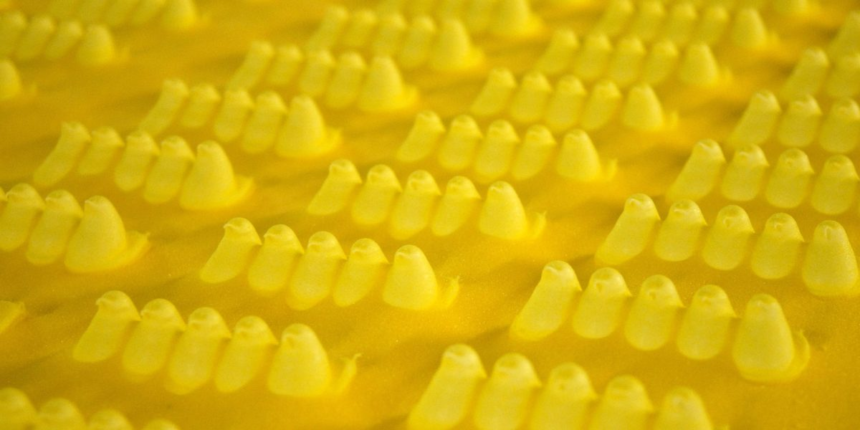
For years every Easter and spring season, Americans stuff their baskets with Peeps, these little neon marshmallow chicks (and sometimes bunnies) coated in petroleum-based synthetic dyes that the FDA has not formally reviewed for safety since (depending on the color) the 1960s, ’70s, or ’80s. For Scott Faber, senior vice president at the Environmental Working Group, that makes the humble Peep something unexpected: a symbol of progress.
Required. That word is doing a lot of work in the food dye debate right now, and it sits at the center of a major argument over whether MAHA’s approach to cleaning up the American food supply is working.
The candy at the center of this policy fight is, by almost any objective measure, controversial on its own, before anyone mentions a single dye.
Sean McBride, founder of DSM Strategic Communications and former executive vice president of the Grocery Manufacturers Association, sees the same gap, but draws the opposite conclusion. If RFK Jr. believes these dyes are poisoning children, McBride argued, the law requires him to act like it.
Jennifer Pomeranz, a public health law professor at NYU, splits the difference between Faber and McBride, saying MAHA’s voluntary approach is actually working, not despite the chaos, but through it.
Whether it’s dye bans, SNAP restrictions, or labeling mandates, the real question isn’t which lever to pull, it’s whether any lever actually improves health outcomes. Overall, and all three experts agree, the current food safety framework is broken.
“No one is saying, ‘I want more cancer with my candy,’” Faber said. “This is a question of whether things that should be safe are safe, and unfortunately, many of the chemicals that we eat are either unsafe or have never been reviewed for safety by someone we can all trust.”