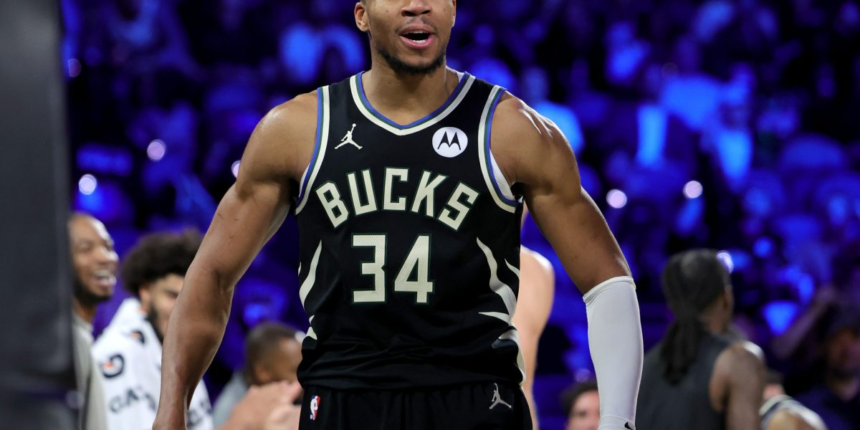
“One of the things in terms of the ethical issues [of the partnership] is the timing,” said Melinda Roth, a professor of business, finance, and sports law at Washington and Lee University. “The timing really puts a spotlight on how prediction markets work, who is allowed to buy contracts, and who has inside information.”
Prediction markets are platforms where users can wager on the outcome of a variety of future events, whether it’s politics, pop culture, and increasingly, sports. People can put money on which movie will win best picture at the Oscars, or whether the Federal Reserve will raise interest rates in March.
Kalshi and Octagon, the agency that represents Antetokounmpo, did not respond to requests for comment.
Prediction markets and traditional sports betting are regulated differently. Wagers on prediction markets are considered to be event contracts and are federally regulated by the Commodity Futures Trading Commission. Traditional sportsbooks, on the other hand, are regulated as gambling at the state level.
The optics of Antetokounmpo’s tie-up with Kalshi are also not helped by the recent betting scandals plaguing the NBA. In October, Miami Heat player Terry Rozier and Portland Trail Blazers head coach Chauncey Billups were arrested for charges related to illegal sports betting and rigged poker games, respectively. And in 2024, another player, Jontay Porter, pleaded guilty to charges that he manipulated his play to help co-conspirators win bets. He received a lifetime ban from the NBA for his actions.
“We let a genie out of the box and we don’t know what that genie is going to do,” said Jay Zagorsky, a professor at the Boston University Questrom School of Business, about the rise of prediction markets and its effect on sports betting for the masses. “The genie is now accessible to far more people, with far less regulation and safeguards.”