President Donald Trump’s feud with NATO over his plans to take over Greenland has precipitated an existential crisis for the alliance that Russia is celebrating.
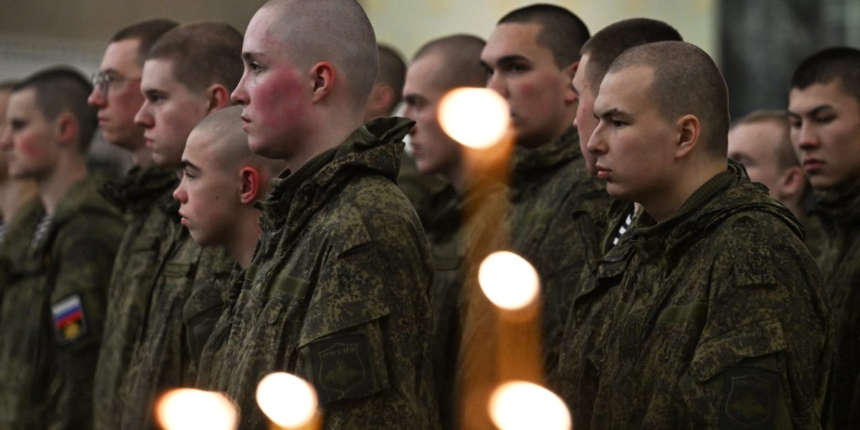
NATO has been a key supporter of Ukraine as it fights off Russia’s invasion, which began nearly four years ago. And while Trump has previously sparked trade tension with Europe, NATO allies have helped maintain U.S. support for Kyiv, though he has often withheld it.
The current tariff battle, however, threatens irreparable harm to the alliance, representing its worst schism in its nearly 80-year history.
If Trump’s trade war jeopardizes NATO’s assistance for Ukraine, it could relieve pressure on Russia’s economy, just as more signs emerge that Putin’s war machine is stifling growth. GDP for 2025 is expected to show a 1% gain or less, and 2026 is headed for a similar crawl. That’s after spurts of more than 4% in 2023 and 2024.
Weapons makers and other suppliers are booming as the Kremlin funnels investments and loans to those industries. But the rest of the economy is suffering.
For example, ISW pointed out that rising wages are fueling inflation as the war causes labor shortages while defense and civilian firms compete for workers. Soaring inflation forced Russia’s central bank to lift interest rates to shy-high levels that have only recently started to come down.
And in the second half of last year, several major Russian civilian manufacturers switched to four-day workweeks and announced layoffs due to falling demand.
As borrowing costs jump, Russian civilians are struggling to buy homes. On top of high prices, the value-added tax rate has gone up to help pay for the Ukraine war while Western sanctions and low crude oil prices have diminished Moscow’s revenue from energy exports.
“ISW continues to assess that increased Western economic pressure on Russia, along with helping Ukraine maintain and even increase pressure on the battlefield, remains critical to changing Putin’s calculus and forcing Putin to face more serious tradeoffs between continuing to pursue his maximalist war aims and sacrificing the quality of life of the Russian people,” the analysis said.
Russian data show unpaid wages nearly tripled in October from a year ago to more than $27 million, with furloughs and shorter workweeks becoming more common. As a result, more consumers are having trouble servicing their loans.
Given the headwinds, the warning wasn’t the first of its kind. In June, Russian banks raised red flags on a potential debt crisis as high interest rates weigh on borrowers’ ability to service loans.
Also that month, the head of the Russian Union of Industrialists and Entrepreneurs warned many companies were in “a pre-default situation.”
And in September, Sberbank CEO German Gref, one of Russia’s top banking chiefs, said the economy was in “technical stagnation,” following his warnings in July and August that growth was close to zero.
The Center for Macroeconomic Analysis and Short-Term Forecasting, a state-backed Russian think tank, said last month the country could face a banking crisis by next October if loan troubles worsen and depositors pull out their funds, according to the Post.
“The situation in the Russian economy has deteriorated markedly,” wrote Dmitry Belousov, head of the think tank, in a note seen by the Financial Times. “The economy has entered the brink of stagflation for the first time since early 2023.”