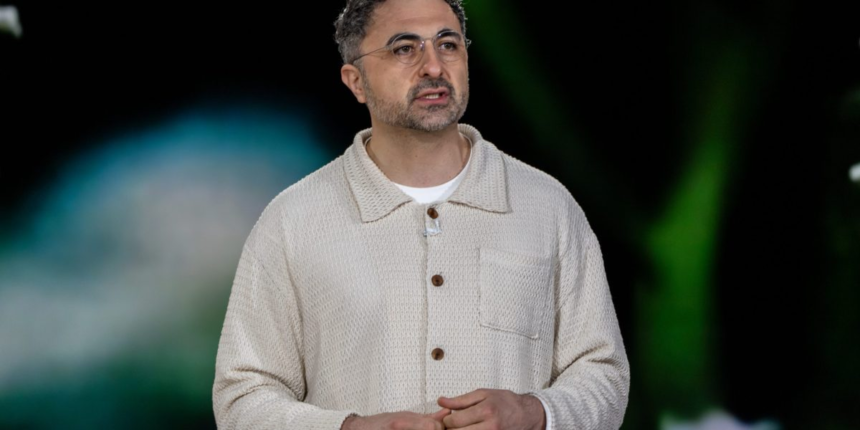
For the back half of the 20th century (what Fortune founder Henry Luce called “The American Century”), MBA and law degree programs were a ticket to a great office job and a path to the American Dream. The 21st century is asking the question: What happens when all those office jobs get automated?
Suleyman cited the exponential growth in computational power as a flashing red signal that AI could replace large swaths of professionals. As “compute” advances, he said, models will be able to code better than most human coders. Shumer and OpenAI CEO Sam Altman have both written recently about their alarm, even sadness, at watching their life’s work rapidly grow obsolete.
Suleyman is adamant about the technology’s potential. He thinks organizations will be able to retrofit the technology to perform any required job function, enhancing productivity across white-collar industries. “Creating a new model is going to be like creating a podcast or writing a blog,” he said. “It is going to be possible to design an AI that suits your requirements for every institution, organization, and person on the planet.”
Suleyman said his core mission as the steward of Microsoft AI is to achieve “superintelligence.” The CEO wants to achieve AI self-sufficiency and reduce its reliance on OpenAI, instead prioritizing the construction of the company’s independent models.
“This after all is the most important technology of our time,” Suleyman said. “We have to develop our own foundation models which are at the absolute frontier.”