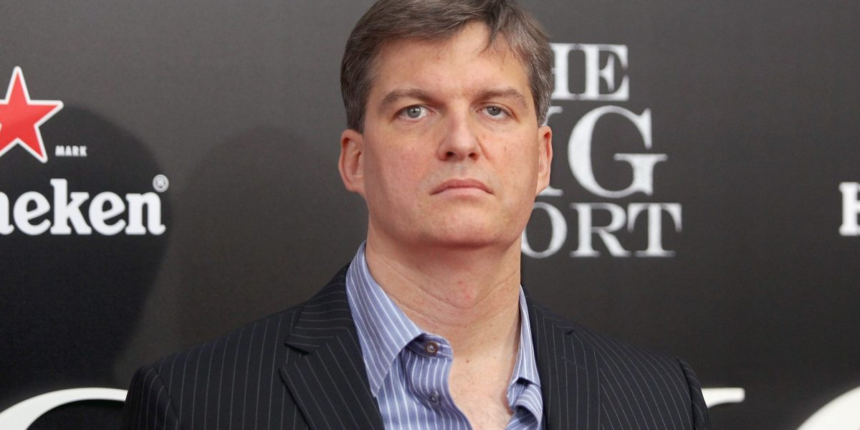
But for every optimist backing Musk’s bid to establish a human colony on Mars is an investor on earth wondering if the plan will ever take off. Burry, in typical form, was open in asking that question.
In a Substack post, the analyst best known for predicting the housing crash before the 2008 financial crisis said he had reviewed a number of trading options for betting against Musk’s company.
Burry was “tempted by that one. But no thank you,” he wrote of the short option.
He isn’t sold on the eye-watering valuation of Musk’s latest venture, which he described as “fundamentally a small space company, a niche telecom, a bedeviled social media company, and a CoreWeave-light.”
As of March 31, SpaceX has racked up an “accumulated deficit” of $41.3 billion, with a $4.27 billion net loss in Q1 of this year, compared with $528 million in the year-ago quarter.
Musk is a notoriously busy man—variously running EV manufacturer Tesla, launching SpaceX onto the market, helping oversee the running of social media company X, and managing a controversial stint in the Trump administration last year—but even then, he finds time to push back at those who move against him.
“If Gates hasn’t fully closed out the crazy short position he has held against Tesla for ~8 years, he had better do so soon,” said Musk in a November post.
The bad blood began in 2022 when Gates reportedly shorted, or bet against, Tesla’s stock to the tune of $500 million, earning him a text from Musk and “super mean” behavior, Gates said in a later interview with Musk biographer Walter Isaacson. At the time, Musk asked Gates if he had taken a short position, which he confirmed, but added he wanted to work with the Tesla CEO on philanthropy.
Musk reportedly responded: “Sorry, I cannot take your philanthropy on climate change seriously when you have a massive short position against Tesla, the company doing the most to solve climate change.”
Burry may, at some point, feel compelled to bet against SpaceX—but Musk hasn’t taken such slights lightly in the past.