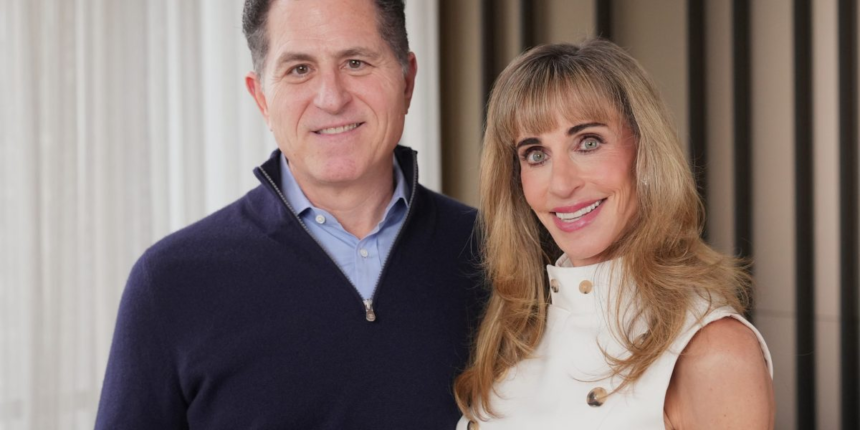
“We want these kids to know that not only do their families care, but their communities care, their government, their country cares about them,” said Susan Dell. “And we’re all rooting for them to have a wonderful future, a bright future, and that that’s available to them.”
Under the new law, the Treasury will deposit $1,000 into the accounts of children born between Jan. 1, 2025 and Dec. 31, 2028 and the funds must be invested in an index fund, which tracks the overall stock market. But it will be up to the families of other children to put money into the accounts. When the children turn 18, they can withdraw the funds to put toward their education, to buy a home or to start a business.
The Dells hope their gift will encourage families to claim the accounts and deposit more money into it, even small amounts, so it will grow over time along with the stock market. They also hope companies and other philanthropists will donate to these accounts.
“It’s hard to give effective dollars away at scale, particularly to the country’s neediest kids in a way that you have confidence that those dollars are going to compound with the upside of the U.S. economy,” Brad Gerstner, a venture capitalist, who advocated for the passage of this legislation. “And so, this is a unique platform that’s being created by the government that I think can unlock major giving.”
Gerstner is also the founder of Invest America Charitable Foundation, which is supporting the Treasury in launching the accounts. He said the goal of the accounts is to give young people funds to jump start their lives but also to help them benefit from the growth of the U.S. economy through investing in stocks.
“Fundamentally, we need to include everybody in the upside of the American experiment. Otherwise, it won’t last. And so, at its core, we think it can re-energize people’s belief in free market, capitalist democracy,”″ Gerstner said of the accounts.
In 2024, about 13% of children and young people in the U.S. lived in poverty, according to the Annie E. Casey Foundation, and experts link the high child poverty rates to the lack of social supports for new parents, like paid parental leave.
The Dells will put money into the accounts of children who live in ZIP codes with a median family income of $150,000 or less.
Ray Boshara, senior policy advisor with both the Aspen Institute and Washington University in St. Louis, said he is excited about the idea that the Trump Accounts will be able to receive contributions from the business, philanthropic and governmental sectors.
“We would like to see this idea continue and get better over time, just like any big policy,’ said Boshara, who co-edited the book “The Future of Building Wealth.” “The ACA, Social Security – they start off fairly flawed, but get much better and more progressive and inclusive over time. And that’s how we think about Trump Accounts. It’s a down payment on a big idea that deserves to be improved and there’s bipartisan interest in improving them.”
Through the Michael & Susan Dell Foundation, the Dell’s have reported giving $2.9 billion since 1999, with a large focus on education.
Michael Dell said they had not initially envisioned committing so much to boost the child investment accounts, but Susan Dell said over time, they decided to increase the size of their commitment.
“We’re thrilled to be spearheading this in the philanthropy sector and are so excited because we know that more people are going to jump on board because really, we can’t think of a better idea and better way to help America’s children,” she said.
___
Associated Press coverage of philanthropy and nonprofits receives support through the AP’s collaboration with The Conversation US, with funding from Lilly Endowment Inc. The AP is solely responsible for this content.