Oseguera Cervantes was wounded in an operation to capture him Sunday in Tapalpa, Jalisco about two hours drive southwest of Guadalajara Sunday and died while being flown to Mexico City, the Defense Department said in a statement. The state is the base of the cartel known for trafficking huge quantities of fentanyl and other drugs to the United States.
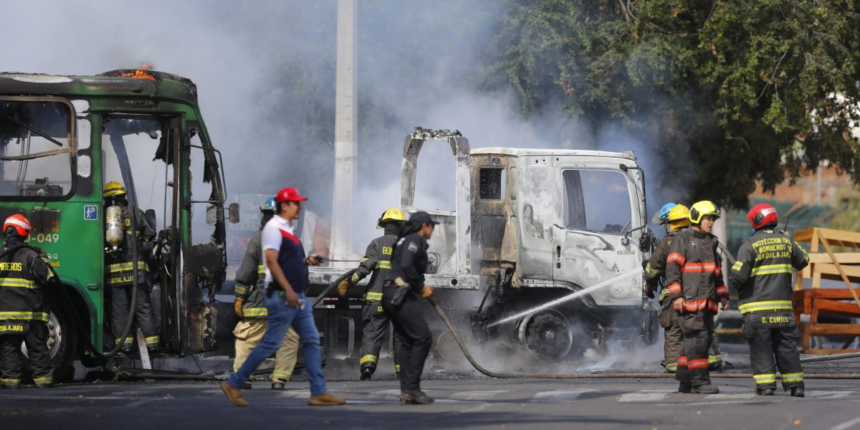
The killing of the powerful drug lord set off several hours of roadblocks with burning vehicles in Jalisco and other states. Such tactics are commonly used by the cartels to block military operations.
Videos circulating social media showed plumes of smoke billowing over the tourist city of Puerto Vallarta in Jalisco, and people sprinting through the airport of the state’s capital in panic. On Sunday afternoon, Air Canada announced it was suspending flights to Puerto Vallarta “due to an ongoing security situation” and advised customers not to go to their airport.
In February, the Trump administration designated the cartel as a foreign terrorist organization.
Mexican President Claudia Sheinbaum, like her predecessor, has criticized the “kingpin” strategy of previous administrations that took out cartel leaders only to trigger explosions of violence as cartels fractured. While she has remained popular in Mexico, security is a persistent concern and since U.S. President Donald Trump took office a year ago, she has been under tremendous pressure to show results against drug trafficking.
The DEA considers the cartel to be as powerful as the Sinaloa cartel, one of Mexico’s most infamous criminal groups, with a presence in all 50 U.S. states. It is one of the main suppliers of cocaine to the U.S. market and, like the Sinaloa cartel, earns billions from the production of fentanyl and methamphetamines. Sinaloa, however, has been weakened by infighting after the loss of its leaders Ismael “El Mayo” Zambada and Joaquín “El Chapo” Guzmán, both in U.S. custody.
Oseguera Cervantes has been significantly involved in drug trafficking activities since the 1990s. He was convicted of conspiracy to distribute heroin in the U.S. District Court for the Northern District of California in 1994 and served nearly three years in prison. Following his release from custody, Oseguera Cervantes returned to Mexico and reengaged in drug trafficking activity.
Since 2017, Oseguera Cervantes has been indicted several times in the United States District Court for the District of Columbia.
The most recent superseding indictment, filed on April 5, 2022, charges Oseguera Cervantes with conspiracy and distribution of controlled substances (methamphetamine, cocaine, and fentanyl) for the purpose of illegal importation into the United States and use of firearms during and in connection with drug trafficking offenses. Oseguera Cervantes is also charged under the Drug Kingpin Enforcement Act for directing a continuing criminal enterprise.
The U.S. State Department warned U.S. citizens in Jalisco, Tamaulipas, Michoacan, Guerrero and Nuevo Leon states to remain in safe places due to the ongoing security operations.