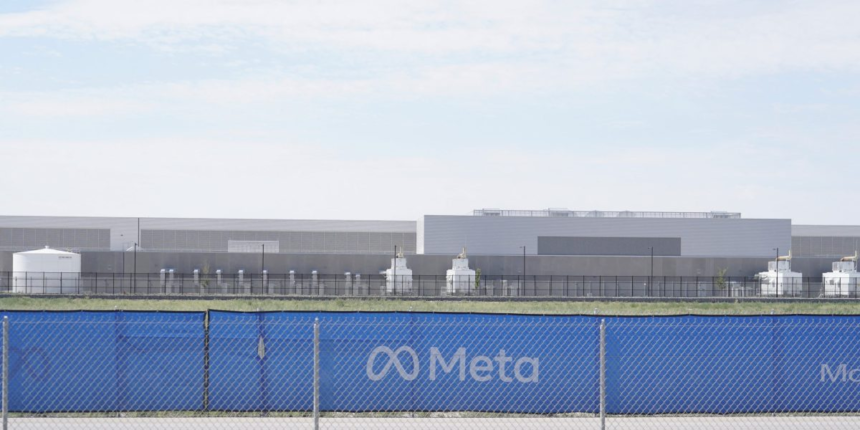
Are data centers the new REIT? Not quite — but Meta’s new mega–data center in northeast Louisiana marks what one expert calls a “decisive shift” in how hyperscalers finance the AI era: by turning data centers into a new investable asset class.
The deal stands out for its scale—the largest private-debt offering ever—and for its A+ rating from S&P, which reflects Meta’s backing of the project (albeit with just a single agency rating). Yet the debt had a yield of 6.58% at issue, a level closer to high-yield, or “junk,” bond territory.
That structure allows Meta to build its data center without putting the full $27 billion of debt on its own balance sheet. The approach—known as a special-purpose vehicle (SPV) or off–balance-sheet financing—is largely new territory for hyperscale infrastructure.
“By being able to access outside capital, you’re not limited to your own free cash flow generation,” McDevitt said. “You’re bringing on investors with return profiles on an infrastructure-type investment that allows companies to build bigger, larger, quicker, and faster.” He compared it to taking out a mortgage: you can buy a bigger house—or, in this case, build more data centers—by borrowing instead of paying cash up front.
“Now what has to happen? Meta has to build this thing, then put workloads in it and operate under the presumption that they’ll monetize those computing loads driven by AI in the future,” McDevitt added.
Still, for now, there’s no reason to think other major banks won’t try the same thing, said McDevitt. “Why wouldn’t others look to mimic [this deal]?”