Wall Street is bracing for a Monday deadline that President Donald Trump set for Iran to reopen the Strait of Hormuz while the global economy reels from an energy crisis that shows little signs of abating.
Futures tied to the Dow Jones industrial average fell 78 points, or 0.17%. S&P 500 futures were down 0.25%, and Nasdaq futures lost 0.32%.
U.S. oil futures dipped 0.12% to at $98.11 a barrel, and Brent crude eased 0.38% to $111.76. The national average gasoline price reached $3.94 a gallon on Sunday, up more than $1 over the past month, according to AAA.
The yield on the 10-year Treasury rose 1.7 basis point to 4.409%. The U.S. dollar was up 0.1% against the euro and flat against the yen.
On Sunday, NATO Secretary General Mark Rutte backed the Iran war and predicted the alliance would eventually come around to support it too, after several members rebuffed Trump’s demand that they provide naval escorts.
In addition to NATO, Trump got more signs of support from the United Arab Emirates, which has suffered from a barrage of Iranian missiles and drones.
Anwar Gargash, a senior UAE diplomat, suggested an increasingly hardened stance toward Iran that aligns more closely with the U.S. and Israeli stance.
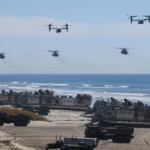
With no evidence of any talks aimed at halting the conflict, the thousands of Marines headed to the Mideast could be involved in a climactic battle to reopen the Strait of Hormuz and crush Iran’s ability to weaponize it again.