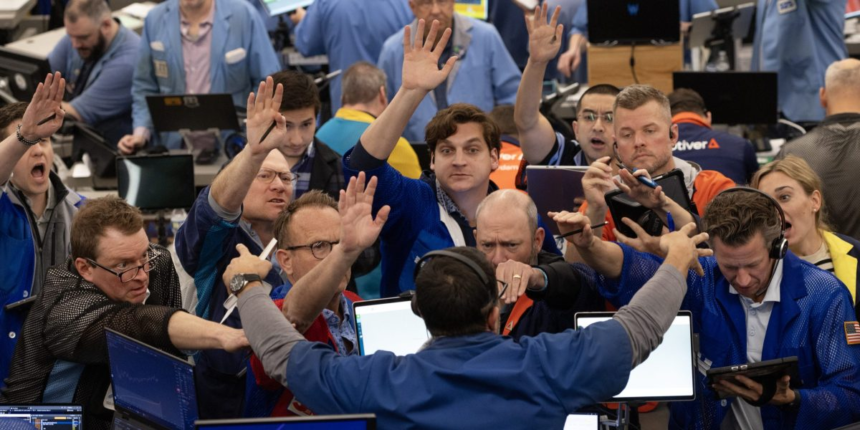
Oil traders weren’t so jubilant. Both U.S. and Brent crude recovered slightly, but U.S. crude still sits close to its high of the war, having surged nearly 9% to $108.95 a barrel on Thursday, while Brent climbed more than 5% to $106.55 after Trump’s speech.
Normally, Brent trades at a $3 to $6 premium over West Texas Intermediate crude, so it is unusual for WTI to be priced higher. But the unusual spread reflects traders’ belief that the price of oil will be higher in May than in June, a phenomenon known as backwardation—an effect of Trump’s stated timeline last night. WTI contracts are trading for May delivery, while Brent is trading for June.
The big reversal for equities reflects the market’s approval of some kind of hybrid model of control over the Strait of Hormuz, where Iran and a U.S. ally share oversight. However, it is unclear how quickly the two countries would start power-sharing, given that Gharibabadi told Sputnik that Iran is currently in a state of war and that peacetime rules can’t be expected to apply under those conditions. The protocol is explicitly a peacetime framework: Iran and Oman would coordinate navigation and require vessels to obtain permits “under normal conditions.”
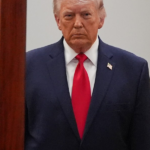
The question is whether either side is actually ready for peacetime. Trump, in his primetime address Wednesday night, pledged to “hit them extremely hard over the next two to three weeks” and threatened to obliterate Iran’s power grid and oil infrastructure if no deal is struck. Iran has denied it is negotiating and has demanded international recognition of its sovereignty over the strait as one of its conditions for ending the war.
Iran, it seems, wants to cement that kind of economic control. And if Trump listens to markets, he might just let it happen.