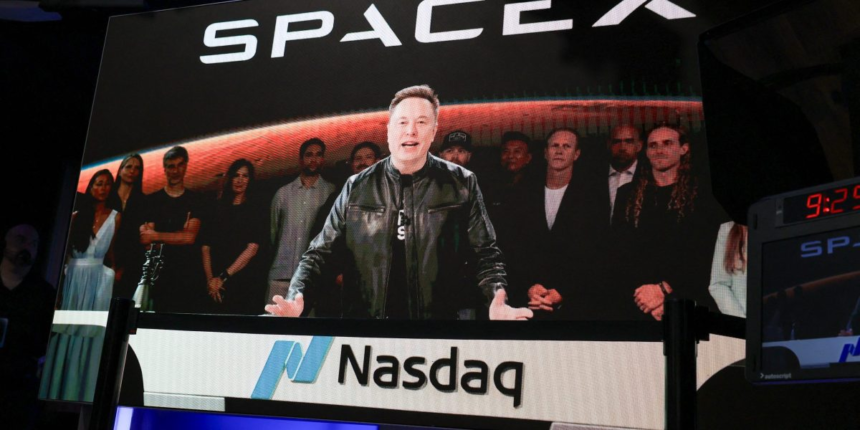
The valuation surged Musk’s net worth above $1 trillion and SpaceX’s valuation to more than twice that—with the company’s market cap reaching $2.1 trillion.
The official trading start was delayed due to intense order matching activity, in which investors who refreshed brokerage accounts on Friday morning saw that SPCX was public, but there were no trades.
At noon Friday, the stock was hovering between $162 and $165. By 1PM, it soared to $175, up nearly 30% from its target price, before settling at above $169. An hour later, SpaceX traded more than 360 million shares, 10 times the total volume that 2026’s second-largest IPO, Cerebras, posted in its first day of trading.
SpaceX closed at $161.11, marking its historic first day of public trading on the Nasdaq with a surge of nearly 20%.
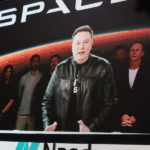
Ahead of the debut, the rocket, satellite and AI company’s CEO Elon Musk addressed Nasdaq in Texas, reiterating the company’s extraterrestrial goals. “SpaceX wants to be able to take you to the moon,” Musk said. “I am confident at this point that with the incredible team that we have here at SpaceX, that we will do that for you.”
He told the crowd of SpaceX employees at Nasdaq’s Starbase, Texas location that at first, he didn’t have high hopes for the company that today, could potentially make him the world’s first trillionaire. “I gave SpaceX less than a 10% chance of succeeding at all.”
“That’s what SpaceX is all about, is take science fiction and create an exciting, inspiring future for everyone,” Musk said. “We want to be able to take anyone who wants to go to the moon, anyone who wants to go to Mars… not just a few astronauts, I mean, you, literally you.”
“There are always problems on Earth,” he concluded, moments before Elton John’s ‘Rocket Man’ started playing. “But there also have to be things that get you excited about the future, that make you glad to wake up in the morning, because you can’t wait to see what happens next.”
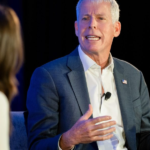
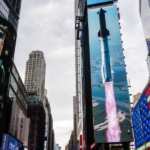
Speaking at the Times Square ceremony after ringing the opening bell, Shotwell said, “Today, we make history again, and we have a history of making history. We’re about 22,000 strong, and thanks go to all of you for hanging in there, for keeping a straight spine as the doubters doubt, to achieve historic things every day.”
The offering priced Thursday afternoon—which was announced in a free-writing prospectus filed with the SEC just after 3 p.m. ET, while markets were still open—was at $135 a share for 555.6 million shares, raising the $75 billion the company targeted and valuing it at $1.77 trillion. Underwriters hold a 30-day option to purchase up to 83.3 million additional shares, which would lift the total raise to $86.25 billion.
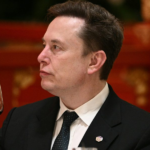
Sen. Bernie Sanders, a long time vocal opponent of the billionaire class who has sometimes publicly shared some words with the SpaceX founder, called it an “absurdity” for the world’s first trillionaire to pay the same in taxes as someone who makes less than $200,000 a year.
Sanders’ colleague Sen. Elizabeth Warren also expressed concern with Musk’s wealth.
In 2019, he told SpaceX employees in an email it would “make sense to take Starlink public in about three years or so,” and in 2020, he promised again an IPO, “but only several years in the future when revenue growth is smooth and predictable. Public market does not like erratic cash flow.” Musk was still playing defense in 2024, after SpaceX ran a $112-a-share insider tender that valued the company at roughly $210 billion (up from $180 billion in a tender just months earlier). He pointed to the litigation over his Tesla pay package as a reason SpaceX should remain private, posting that “the legal load and pressure for short-term results for a public company are very high.”
There’s one big concern hanging over the debut: Starship, the vehicle at the center of SpaceX’s most ambitious projections, is currently grounded while the FAA conducts a mishap investigation into its most recent test flight.
Using $100 million of his PayPal proceeds, Musk visited Russia three times to buy refurbished Intercontinental Ballistic Missiles (ICBMs) for a Mars greenhouse stunt. Upon his return, he realized rocket materials accounted for roughly 2% of a typical launch cost, and he decided to build some himself. Throughout the years, he launched several liquid-fueled rockets—some fell, and some fell flat—and would eventually call for data centers and even communes on Mars.
The IPO is as unconventional as the man behind it. Usually, most companies set a price range and let the book-building process find the clearing price. In this case, SpaceX simply told investors what the stock would cost, fixing $135 a share before the roadshow even began, and making Thursday night’s pricing a formality. It also reserved roughly 30% of shares for retail investors, about three times the typical allocation for an offering of this size.
The hype surrounding SpaceX’s debut left analysts wondering ahead of Friday whether the stock could possibly live up to it. Historically, among the largest public offerings on record, the odds of a company posting negative returns in its first three months are roughly a coin flip.
You can blame oil markets for that one, but the tech-growth story powering SpaceX is the same one that plagued Facebook’s May 2012 debut. The social network fell nearly 50% in its first three months and traded below its $38 offer price for more than a year before becoming one of the best-performing mega-cap IPOs ever. Internationally, SoftBank Corp dropped 14.5% on its first day in Tokyo in December 2018 and spent years below its offer price.
SpaceX is the first of a hotly anticipated “IPO summer.” Anthropic filed its confidential S-1 on June 1; OpenAI followed a week later, targeting a September debut at an $852 billion valuation. If both land before year’s end, 2026 will close as the year public markets finally had to price artificial general intelligence.