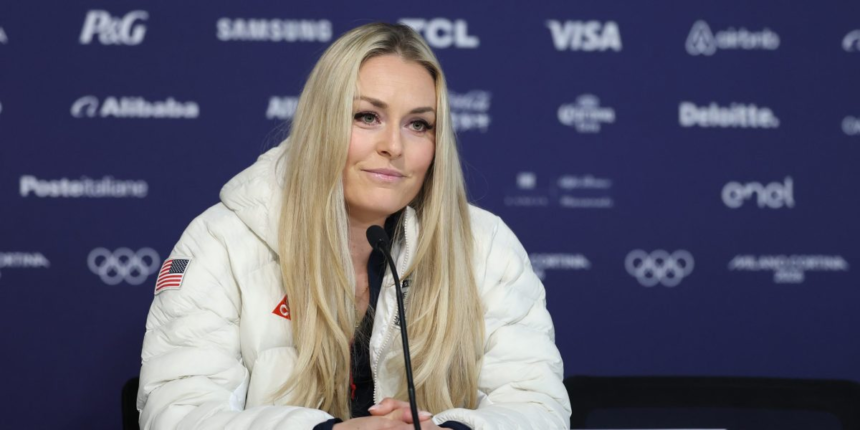
She’s a nostalgic figure, he added, “but it’s not the super-soft comforting kind.” Instead, it’s seeing someone associated with excellence and dominance reemerging and “refusing to stay frozen in time” in a way that mirrors much of her generation entering their 40s, either having fewer guarantees in life, fewer victories, even needing to reinvent themselves. “She’s for sure a symbol of millennial tenacity,” persevering after setbacks in a way that her whole generation can relate to. The way that Vonn got back on her feet after repeat injuries, without any outside applause, even with criticism, “feels very on brand for a generation that has really had to keep going over and over again when when the kept moving or the goalposts kept moving.”
Doctors and officials describe Vonn’s condition as stable but serious, with intensive monitoring and a lengthy rehabilitation ahead. She later confirmed that she sustained a complex tibia fracture that was stable following the first operation, but will require multiple surgeries to fix properly. For many fans and fellow skiers, the images of one of the sport’s greatest champions screaming on the snow were heartbreaking. Yet even as she lay in a hospital bed, a parallel drama raged online, with critics accusing her of recklessness and questioning whether she should ever have started a race on a torn ACL and an artificial knee. Some argued she took a spot from younger teammates and placed rescue crews and broadcasters in an impossible position.
Networks had leaned into the audience’s familiarity with Vonn, building Milan‑Cortina promos around her comeback, much as advertisers have leaned into Backstreet Boys reunions and sequels to 2000s hits at the box office. In a year when 2016 nostalgia trended on social media and Inside Out 2 vaulted past $1 billion on the strength of millennial affection for older IP, Vonn’s crash felt like the moment the nostalgia trade hit a wall: music and movies from the 2000s can be rebooted indefinitely, but watching a real person absorb another catastrophic impact is different.
Vonn did not enter Cortina quietly. She used social media to clap back at skeptics who doubted either the severity of her injuries or the wisdom of racing through them, snapping that “just because it seems impossible to you doesn’t mean it’s not possible” and brushing off unsolicited medical advice. She called out coverage that framed her return as a midlife crisis, pointing to what she saw as ageist narratives around a 40‑something woman choosing risk on her own terms.
Serena Williams chased one more major deep into her late 30s and at 40, generating huge ratings but also accusations that she was tarnishing a nearly flawless legacy. Diana Taurasi has played well into her 40s while facing questions about whether she is blocking younger talent or modeling longevity. Manny Pacquiao’s attempt to extend his boxing career toward an Olympic appearance at 45 ran into age‑limit rules and concerns about the optics and health risks of watching a faded great take more punishment. These comebacks depend on emotional capital built earlier, and they often end with messy exits that strip away nostalgia and force audiences to confront their own unease with aging and decline.
Vonn understood that her return to the Olympic stage had the potential to be messy. She has talked about therapy, about life beyond ski racing, about trying to design a nontraditional middle age that may or may not include a family. Cortina was less a pure nostalgia play than an assertion of autonomy, a statement that women in their 40s can still choose danger and ambition over quiet respectability. The fairy‑tale framing came from the culture around her, which wanted a neat ending from someone whose career has never been neat. “I feel like she really claimed ownership over her body and her career and her own narrative,” Litman said, adding that she communicated an understanding of the risks and persisted anyway.
“For me, it’s about her legacy and her agency and just adding another chapter to to her story,” Litman said, adding that he thinks it will be really interesting to to see what she does next. “She’s not sort of that monolithic personality with just the athlete to her resume and there’s so much other kind of brand and entrepreneurship work that she’s done and probably that will be her next move.” She’s unique, he argued, having fallen hard, both literally and figuratively, and had to repeatedly rebuild herself, also literally. “That combination of both excellence and scars just makes her all more of a millennial hero.”