“There is a Chinese proverb I love: ‘A single tree does not make a forest,’” Cook said earlier this year at the China Development Forum, a summit organized by Beijing. “Together, I believe we can plant that forest.”
Ternus inherits a China business that’s turned a corner from a tricky few years, yet still brings significant headaches, from a protectionist Washington and a prickly Beijing to a Chinese consumer who has grown less reflexively loyal to Western brands.
“Supply chain execution will be the defining early test of Apple’s next CEO,” says Nabila Popal, a senior director of the data and analytics team at International Data Corporation (IDC), a market research firm. “The success of Ternus’ tenure may hinge on whether he can advance Apple’s China‑plus‑one strategy without triggering political or commercial backlash in China, and maintain the momentum and share in a market Apple cannot afford to fall back on.”
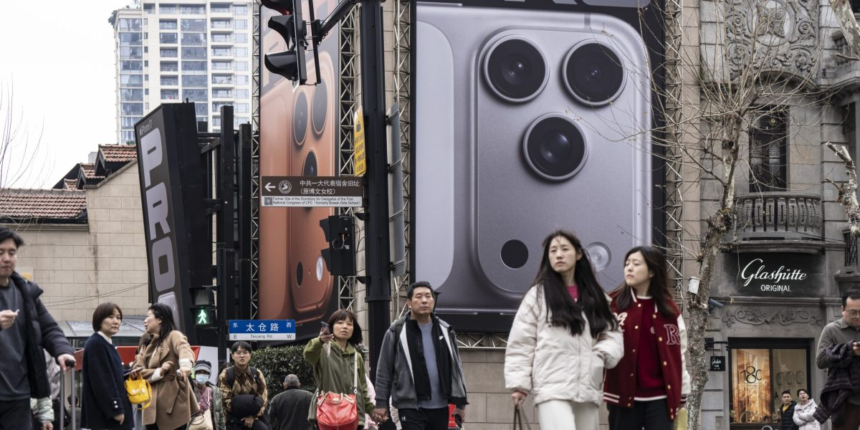
“Apple’s remarkable turnaround in China is due to the incredible success of the iPhone 17,” Popal says. New hardware helped, but even the phone’s new orange color—nicknamed “Hermès Orange” by Chinese consumers—won back Chinese consumers. “Such simple design changes that help scream “I have the latest iPhone” go a long way to boost demand, especially in a brand conscious market like China,” Popal adds.
The memory crisis is also giving Apple an edge over its Chinese counterparts. As AI companies and device makers compete for limited supplies from a handful of chip manufacturers, Apple’s financial firepower allows it to outspend rivals, “a luxury many other Chinese players do not have,” Popal points out.
IDC’s Popal thinks the release will “help push Apple into a category it previously entirely conceded to the competition, and give Huawei—the leader in foldables globally and in China—a run for its money.”
Apple Intelligence, Apple’s AI service, still isn’t available in China. Beijing requires AI tools to be approved by the Cyberspace Administration of China. Apple has struck deals with Chinese tech companies like Baidu and Alibaba to help convince Chinese regulators, to no avail.
One of Apple’s Chinese competitors was also able to do something the U.S. company couldn’t pull off: Make a car. Apple studied the car market for the better part of a decade before abandoning the project over profitability concerns.