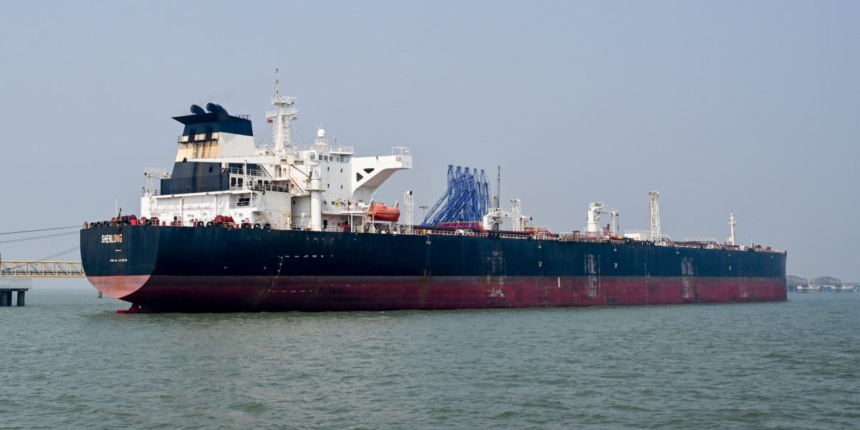
An Iranian supertanker was spotted in the waters north of Hormuz on Sunday, with its destination listed as China, according to vessel-tracking data compiled by Bloomberg. A few more Iran-linked ships crossed through the chokepoint in the last 24 hours.
Electronic interference continues to disrupt vessel-tracking systems in the region. The practice of ships disabling AIS in high-risk waters is also reducing the timeliness and reliability of tracking information.
A VLCC, an LPG ship and a couple of bulk carriers, all linked to Iran, were among the vessels seen exiting the Gulf early Sunday.
With vessels going dark in high-risk waters, transit counts may appear lower initially and be revised higher once delayed data emerges.
An Iran-linked containership also entered the Persian Gulf during the past 24 hours.
When potential transits are identified, signal histories are examined to determine whether the movement appears genuine or is the result of spoofing — where electronic interference can falsify the apparent position of a ship.
Some transits may not have been detected if vessels’ transponders haven’t been switched back on. Iran-linked oil tankers often steam from the Persian Gulf without broadcasting signals until they reach the Strait of Malacca about 10 days after passing Fujairah in the UAE. Other ships may be adopting similar tactics and won’t show up on tracking screens for many days.