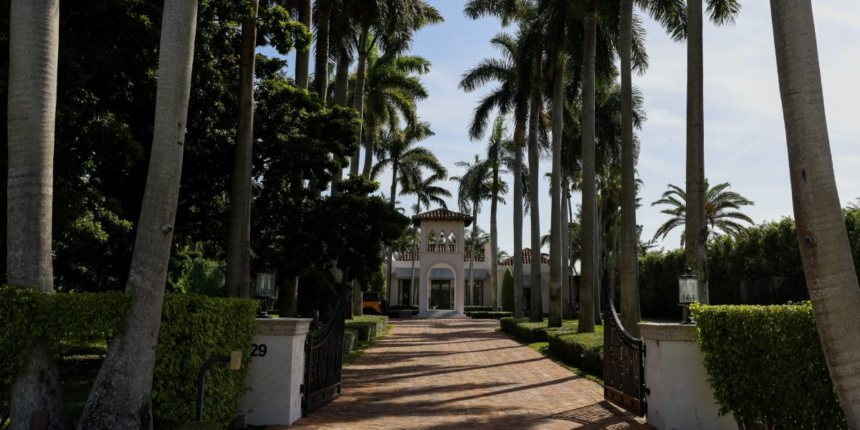
In a city known for flash and nine-figure price tags, Miami’s most coveted waterfront neighborhood features addresses that start at $60 million—and a near guarantee that you’ll never be able to visit.
The main island contains a mere 40 lots of purely waterfront property, adding another layer of exclusivity on top of the inflated cost to entry. The island’s interior is dominated by the Indian Creek Country Club and its private 18-hole golf course. Those looking to rub shoulders on the links will have to reportedly pay a $500,000 initiation fee and go through a lengthy admissions process.
With only 84 residents as of 2020, Indian Creek Island is one of the most exclusive enclaves in America, and a big reason why is the privacy and security that it affords its ultra-wealthy residents.
Indian Creek is an independent municipality with its own government and a police force that patrols the island 24/7 not only by land but also by sea. A single guarded bridge connects it to the mainland, and any visitors must show their ID and may even undergo vehicle inspection, said Martirena, who has toured properties there with clients.
“It’s a bubble, and no one can get on and off, unless you have a reason,” said Martirena, who specializes in ultra-luxury real estate.
Unlike nearby South Beach celebrity enclaves such as Palm, Star, and Hibiscus Islands—where boat tours regularly pass by waterfront mansions—Indian Creek’s marine patrols keep onlookers away, Martirena told Fortune.
Because of the island’s location and strategic landscaping, very few homes in the surrounding areas, like the Bay Harbor Islands or Surfside, have a clear view of Indian Creek Island. This makes it very private, said Martirena, and very desirable.
“It’s the place to be,” said Martirena. “People of that caliber feel safe and not bothered.”
And yet, wealth alone doesn’t guarantee access. All the listings are done “off market,” said Martirena, meaning a buyer’s agent will have to deal directly with a property owner’s representatives, and contact them multiple times if they are not quite ready to sell.
“It’s a small community, and just to keep the chatter at a low level, they do it all internally and very private,” he said.
Martirena said his own business has picked up over the last couple of weeks, with three recent inquiries that he attributed directly to the potential wealth tax.
“They’re kind of pre-planning ahead of time. They don’t want to move here,” he said. “They want to stay in the state of California, because they love where they’re at, and they never thought of moving. But they work very hard for their money, and they said they like their pocketbook much more.”