Over his decades in public life, Trump has never been one for niceties. But even by his standards, the tumult of the past week stood out because it crystallized his determination to erase the rules-based order that has governed U.S. foreign policy — and by extension most of the Western world — since World War II.
The president and his supporters have dismissed that approach as inefficient, overly focused on compromise and unresponsive to the needs of people contending with rapid economic change. But in its place, Trump is advancing a system that is poorly understood and could prove far less stable, driven by the whims of a single, often mercurial, leader who regularly demonstrates that personal flattery or animus can shape his decisions.
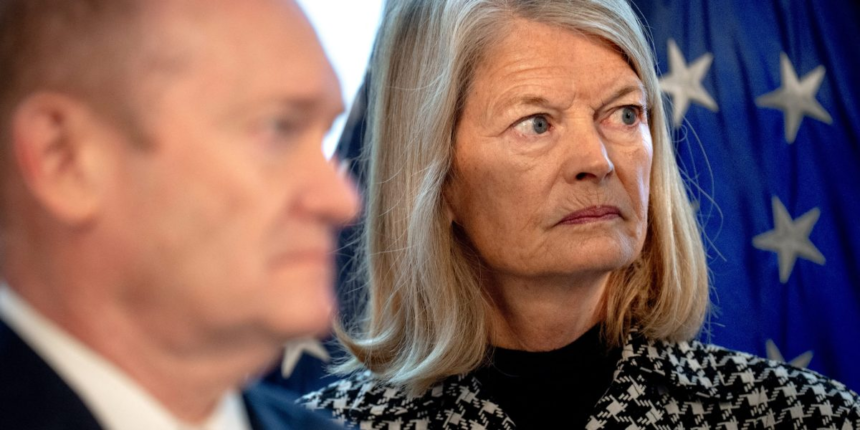
“It may be you just had a bad telephone call with the president and now you’re going to have tariffs directed at you,” she told reporters. “This lack of stability and reliability, I think, is causing what were traditionally reliable trade partners to be saying to other countries, ‘Hey, maybe you and I should talk because I’m not sure about what’s going on with the United States.’”
The Trump-centric approach to governing is hardly surprising for someone who accepted his first Republican presidential nomination in 2016 by declaring that “I alone can fix” the nation’s problems. As he settles into his second term with a far more confident demeanor than his first, he has delighted supporters with his to-the-victor -goes-the-spoils style.
“And we haven’t met any resistance,” Bannon said.
That’s certainly true in Washington, where the Republican-controlled Congress has done little to check Trump’s impulses. But leaders of other countries, who have spent much of Trump’s administration trying to find ways to work with him, are increasingly vocal.
Carney is quickly emerging as a leader of a movement for countries to find ways to link up and counter the U.S. Speaking in Davos ahead of Trump, Carney said, “Middle powers must act together because if you are not at the table, you are on the menu.”
“In a world of great power rivalry, the countries in between have a choice: to compete with each other for favor or to combine to create a third path with impact,” he continued. “We should not allow the rise of hard powers to blind us to the fact that the power of legitimacy, integrity, and rules will remain strong — if we choose to wield it together.”
Trump did not take kindly to those remarks, responding with threats in Davos before yanking the Board of Peace invitation.
“Canada lives because of the United States,” Trump said. “Remember that, Mark, the next time you make your statements.”
Carney, however, was unbowed, speaking of Canada as “an example to a world at sea” as he crafted a potential template for other world leaders navigating a new era.
“We can show that another way is possible, that the arc of history isn’t destined to be warped toward authoritarianism and exclusion,” he said in a speech before a cabinet retreat in Quebec City.
His tactics have raised fears that Trump is imposing long-term damage on the U.S. standing in the world and encouraging countries to rethink their alliances and deepen their ties with China. Carney already traveled there earlier this month to meet with President Xi Jinping.
“Those who were accommodating and who negotiated in good faith, like the EU, which did not impose retaliatory tariffs, seemed to have not won any of his respect,” Coons said. “They can reach their own conclusions, but it would seem to me that trying to find a way to accommodate him when the foundation of his demands about Greenland is unhinged … seem to me to suggest a course of action.”
___
Associated Press writers Becky Bohrer in Juneau, Alaska, Rob Gillies in Toronto and Pan Pylas in London contributed to this report.