I was wrong.
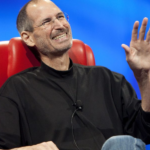
Tim Cook is no Steve Jobs. But there is no other Steve Jobs. The probability of another Steve Jobs replacing Steve Jobs is nearly zero. As I look at Tim Cook’s tenure, I can see that if he and Steve had run Apple together, the company could have been a lot more successful. Tim, as Jobs himself described him, “is not a product guy,” and so he failed to come up with another product of the iPhone’s magnitude. The Apple Car, which could have been that product, was a giant failure with several changes of direction and eventual disbandment. Apple Vision Pro felt half-baked — I’m not sure Steve Jobs would ever have released it. Siri, revolutionary when it launched on the iPhone, today has the IQ of a toaster compared to other AI models. Apple just settled a class-action lawsuit for exaggerating the AI capabilities of its newest iPhones.
I’d argue that if we had to choose between Jobs’s creativity and vision and Cook’s ability to run an insanely complex supply chain and manufacturing operation, Cook was more important to Apple than Jobs at the time of Jobs’s passing. And then again, talent like Jobs’s is almost irreplicable, while Cook’s talent is much easier to replicate.
Companies need different CEOs at different stages of their lives, because they’re solving for different problems. This brings me to BRK.
BRK today comprises GEICO, a consumer auto insurer; the reinsurance operations run for decades brilliantly by Ajit Jain — who has now named Charlie Shamieh of Gen Re as his successor; BNSF, one of the largest railroads in the country; a collection of other operating businesses; a portfolio of marketable securities (Apple, Coke, Amex, etc.); and roughly $400 billion of cash.
BRK requires three skill sets today. The first is replacing Ajit Jain, who will be very difficult to replace — though the succession is now identified. The new CEO’s job is to make sure the right people are running that business. The second is running the rest of the BRK portfolio of private companies, and this is where BRK needs the most help. Buffett was never a traditional CEO. He loved investing (capital allocation), not managing people, and he avoided conflict at all costs. He bought businesses, let managers run them, collected the cash flows, and reinvested. Today, BRK has a collection of more than 100 operating businesses. BNSF and GEICO are the ones that matter most, and both have become hallmarks of mediocrity.
Buffett famously said you want to own businesses an idiot can run, because someday one will. Both GEICO and BNSF have substantial moats and have survived under-management, but Buffett’s statement is less true today than it was decades ago. The half-life of a moat is shrinking much faster in the age of AI.
As an analyst, I can look at BNSF and GEICO numbers and see they are being under-managed. As a consumer, I can observe that Dairy Queen, a company BRK bought in the late ’90s, has been substantially mismanaged. DQ is a beautiful business: most of its stores are franchised, so they require no capital. Under the right management, it could have tripled in size. The quality of its ice cream has not changed, but the innovation in food and the look of the restaurants have declined under BRK ownership. Every store I’ve visited looks like it’s run by a mom-and-pop. But instead of micromanaging DQ, Buffett had more important decisions to make, like buying Apple or the Japanese trading conglomerates.
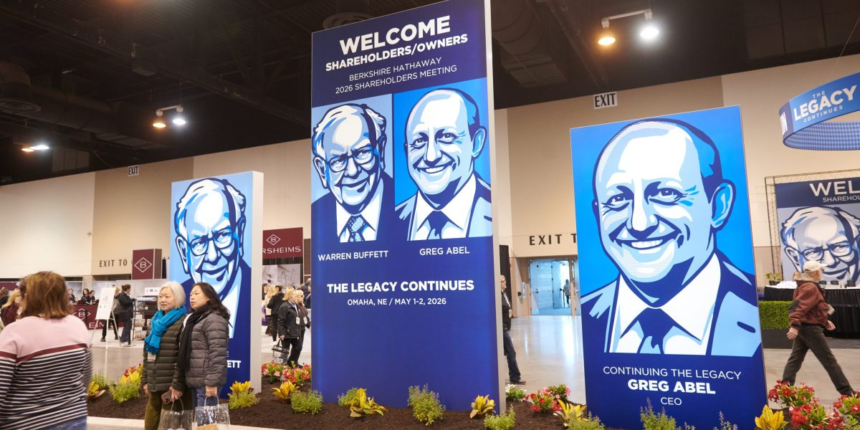
BRK has reached a size where, absent a real financial dislocation, capital allocation is unlikely to be the source of forward returns. The low-hanging fruit is improving the performance of BRK’s core holdings, and maybe even shedding companies that shouldn’t be in the BRK portfolio. Greg, a billionaire and a large shareholder of BRK, has proven to be a shrewd operator of BRK’s energy business. Choosing Greg was one of the most important decisions Buffett made in decades. At his first annual meeting, we could see why. A corporate Mr. Fix-It is walking through every business, identifying key performance indicators, installing the right incentives, bringing technology to them, and replacing managers who need replacing — doing things Buffett could not and would not do, but that need to be done.
Abel is not Buffett and that is okay. In fact, it is a good thing. Greg Abel may not draw 40,000 people to Omaha for the annual meeting. But he’ll make the difficult decisions Buffett didn’t want to make. He’ll make the trains run on time, literally and figuratively.
The opinions expressed in Fortune.com commentary pieces are solely the views of their authors and do not necessarily reflect the opinions and beliefs of Fortune.