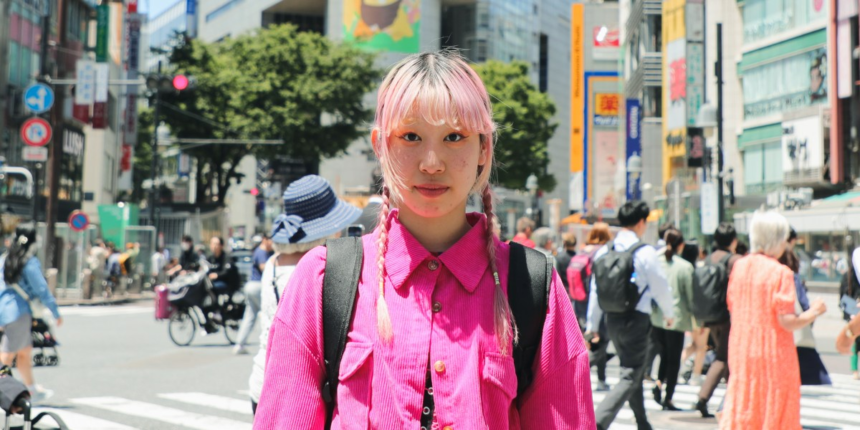
For many first‑time visitors, Tokyo is a must‑see, less as a historic capital than as an ideal place portrayed in the online videos and shows they grew up streaming. In short, Japan for Gen Z isn’t just a cool country to visit, it’s a way of life and a romantic escape, something like the France or Italy of the 21st century.
Gen Z’s hunger for Japan is no longer just about pop culture; it is increasingly about social order. In interviews, young travelers describe a country that feels like “the future”—a place with high‑speed trains, spotless subway platforms, and convenience stores that are cleaner than some American restaurants.
Tokyo, one of the densest cities on earth, is widely seen as remarkably clean despite having almost no public trash cans, a small detail that astonishes many U.S. visitors. White argued this reflects an internalized sense of responsibility, not a fear of punishment: People carry their trash home because that’s what everyone does. It’s in marked contrast to an American culture where politeness feels optional, and public spaces can become battlegrounds.
Furthermore, Gen Z’s fascination with Japan, primarily as a longing for civility in contrast to a chaotic, rude America, oversimplifies the realities of the country they’re undeniably flocking to visit. It risks turning Japan into a moral foil for the United States rather than engaging with more grounded motives such as pop‑culture influence, food, affordability, and the basic desire to see somewhere new.
Young Americans, often skeptical of institutions at home, seem surprisingly comfortable with Japan’s dense web of social expectations, from bowing to sorting trash into multiple categories. Rather than seeing these norms as oppressive, many interpret them as a shared agreement that makes crowded life bearable—and that, they say, is exactly what feels missing in the United States.
For this story, Fortune journalists used generative AI as a research tool. An editor verified the accuracy of the information before publishing.