Welcome to Eye on AI, with AI reporter Sharon Goldman. In this edition…Meta’s giant Hyperion data center gets even bigger…OpenAI and Amazon talk about an alliance…Is the AI bubble popping because AI is actually working?…AI makes inroads at the Super Bowl (at least in the ads).
I’m in a bit of recovery mode today, having just returned from several days in northeast Louisiana visiting Meta’s massive AI data center site, known as Hyperion, for a feature story I’m reporting.
I’ve been scouring the thesaurus, trying to land on the right word to describe just how large, loud, and chaotic this construction site is. Colossal? Mammoth? Sprawling? Let’s put it this way: it takes a while just to drive the length of the site—it stretches roughly five miles from top to bottom.
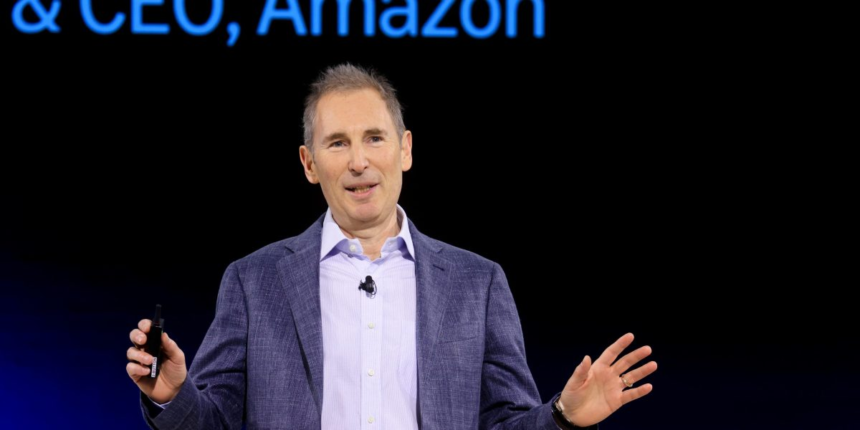
The news comes just a day after Amazon finally made its Alexa+ AI assistant available to everyone in the U.S., nearly a year after its initial launch. I attended the splashy unveiling in New York City last February, when the company pitched the service as a souped-up version of the original 11-year-old Alexa—one that could handle multiple queries at once and act as an “agent,” taking actions on your behalf like booking a repairman or ordering an Uber.
Other testers complained that the assistant talked nonstop, ignored repeated commands to be quiet, or blasted music at full volume when no one was home.
I’ve been following the journey of Amazon’s Alexa closely since the post-ChatGPT dawn of generative AI in 2023. That September, Amazon held another glitzy event—this time at its second headquarters in Washington, D.C.—where David Limp, then the company’s head of devices and services, demonstrated a new generative-AI-powered Alexa by saying, “Alexa, let’s chat.”
The September 2023 demo, they emphasized, was just that—a demo. The large language model at the heart of the new Alexa, which Amazon positioned as a rival to OpenAI’s ChatGPT, was, according to former employees, far from state-of-the-art. Research scientists said Amazon lacked both the data and the specialized computing infrastructure needed to train and run leading-edge LLMs at scale.
And yet, problems persist. Can OpenAI really solve Alexa’s long-standing problems? Or would an Amazon–OpenAI deal divert OpenAI’s attention at a moment when it is locked in fierce competition with Google and Anthropic? And looming over it all is Apple, whose own deal with Google to power Siri complicates an already crowded AI landscape.
More than anything, the reported talks reveal how desperate even the biggest players have become to stay ahead in a no-brakes AI race.
With that, here’s more AI news.
Sharon Goldman
sharon.goldman@fortune.com
@sharongoldman