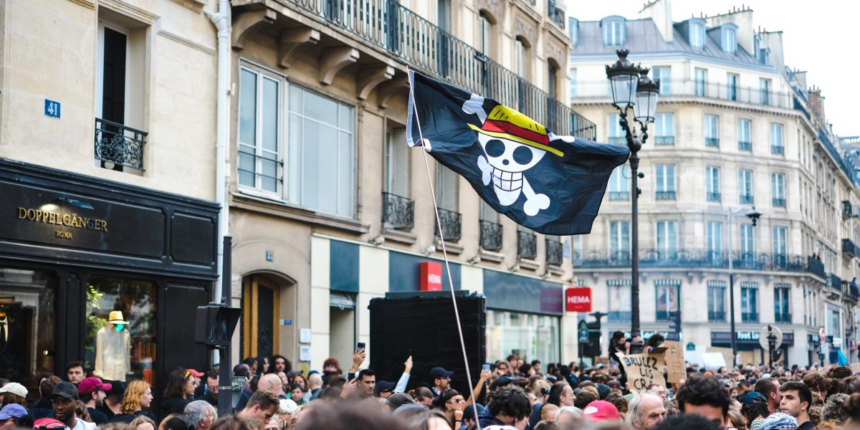
For fans, the “One Piece” flag is not a casual decoration but an emblem of defiance and perseverance. Luffy’s ability to stretch beyond physical limits after consuming a magical fruit has become a powerful metaphor for resilience, while his unwavering quest for freedom against impossible odds resonates with young people navigating political environments marked by corruption, inequality and authoritarian excess.
When protesters adopt this flag, they are not simply importing an aesthetic from popular culture, but are drawing on a narrative already legible to millions.
Solidarity in this setting does not require party membership or ideology. Instead, it depends on shared cultural references. A meme, gesture or flag can instantly carry meaning across divides of language, religion or geography. This form of connection is built on recognizable cultural codes that allow young people to identify with each other even when their political systems differ.
The “One Piece” flag is not alone in being reimagined as a symbol of resistance.
This blending of politics, entertainment and personal identity reflects a hybrid media environment in which symbols drawn from fandom gain power. They are easy to recognize, adapt and defend against state repression.
The spread of the flag also reflects a broader shift in how protest ideas move across borders. In the past, what tended to travel were tactics such as sit-ins, marches or hunger strikes. Today, what circulates fastest are symbols, visual references from global culture that can be adapted to local struggles while remaining instantly recognizable elsewhere.
For today’s young activists, culture and politics are inseparable. Digital nativity has produced a generation that communicates grievances through memes, symbols and cultural references that cross borders with ease.
When protesters in Jakarta, Kathmandu or Manila wave the “One Piece” Jolly Roger flag, they are not indulging in play-acting but transforming a cultural icon into a living emblem of defiance.