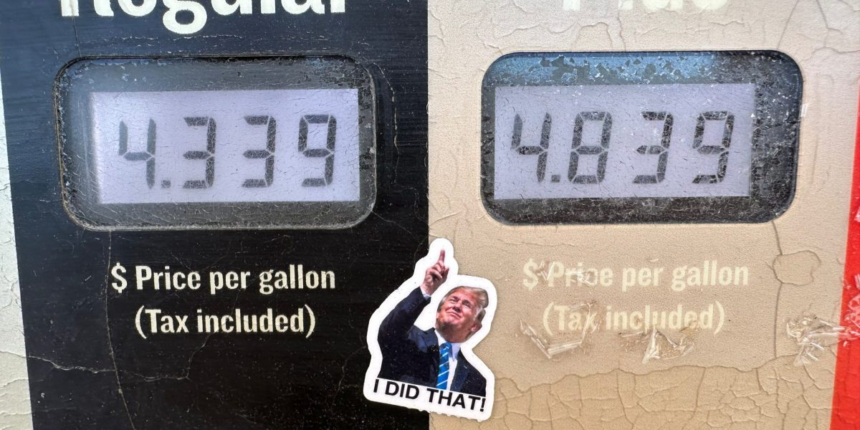
“Gas is a kind of catalyst,” Chapman said. “It trickles down into the entire budget. We’re trying to keep everything as normal as possible. But it’s starting to feel like it’s adding up more and more.”
Well before the U.S. and Israel launched the war, many consumers already were being more choosy with their discretionary purchases, fatigued by several years of stubborn inflation and tariffs on imported goods imposed last year.
Members-only warehouse stores like Costco, Walmart’s Sam’s Club and BJ’s Wholesale Club have seen more traffic at their fuel pumps since the war began in late February, according to the companies. Fuel typically costs less at the wholesale clubs.
“That’s an indication of stress,” Rainey said.
Costco members also are making changes. They are visiting store gas stations more frequently to “top up in between what would have normally been a gap between getting the tank to empty because of the concern about what might the gas price be tomorrow,” Chief Financial Officer Gary Millerchip said in late May.
Meanwhile, the gas price surge has hurt convenience stores, where 80% of all fuel is sold in the U.S., according to Jeff Lenard, a vice president at the National Association of Convenience Stores.
“When you lose gallons to the big box, you also lose in-store sales,” Lenard said.
Higher gas prices did not stop many Americans from dining out in the first two months of the war with Iran. Tax refunds helped, the National Restaurant Association said. Customer traffic at U.S. restaurants in April was unchanged from the same month last year, although a 2.6% increase in restaurant spending resulted largely from higher menu prices, according to market research firm Circana.
“It’s telling me that people are sticking more to their shopping list,” Leonard said.
Sophie Tolsdorf, 29, of La Grange, Kentucky, said she is one of the consumers stocking up on meat when the price is reasonable. She also switched to buying whole fruit instead pre-cut fruit in containers and cut back on the rawhide bones for her dog that cost $40 a pack.
“He might have noticed,” Tolsdorf said. “He’s definitely a little bit bored during the workday now.”
Between April 25 and May 23, U.S. retailers sold 6% fewer non-grocery products than they did during the comparable four-week period of 2025, Cohen said. Housewares, clothing, footwear and sports equipment had the biggest declines, anywhere from 5% to 7%. Circana reported that toys and beauty items remained bright spots, registering at least an 8% increase in the number of units sold.
Location intelligence company Placer.ai, which tracks people’s movements based on cellphone usage, saw visits to the gas stations of BJ’s, Costco and Sam’s Club stores start to accelerate in early March, aligning with a sharp rise in fuel prices, according to R.J. Hottovy, the company’s head of analytical research.
By early May, Placer.ai’s data showed four consecutive weeks of reduced foot traffic at clothing, electronics and home furnishing stores, and more trips to grocery stores and dollar stores.
“Consumers are prioritizing value-oriented retailers like warehouse clubs, superstores, and off-price chains,” Hottovy said.