A mystery has been roiling longtime wearers of Dockers’ ubiquitous khaki men’s pants: Why are things dropping out of people’s pockets when they sit down?
By IwearPants’ measurement, the pockets on his new Dockers are 1.5 inches less deep than his old pair. And he made a plea: “If Dockers (or parent Levi Strauss) needs to raise the price by a couple of bucks per pair, so be it. Just give me back deep pants pockets on my Dockers.”
The Dockers pocket predicament—which some dismiss as an imagined problem—predates ABG’s ownership. But it shows the peril of a 1.5-inch difference—that razor’s edge between a loyal customer and one who abandons a product or company. Even the most beloved brands can become vulnerable following perceived changes or quality erosion that upset passionate consumers—and when heritage brands are purchased by holding companies like ABG, which seek to optimize and grow the brands globally, that passion can be a double-edged sword.
Dockers followed a well-trodden path, and one that many iconic brands have taken in recent years. Brand management companies including ABG, WHP Global, and Marquee Brands have assembled portfolios that include dozens of household-name brands. These companies have emerged as the new power brokers in fashion and retail, raking in some $50 billion in sales globally each year.
The cherished American retail names now owned by these companies make a long list: WHP owns Toys “R” Us and Babies “R” Us, Anne Klein, Express, Bonobos, and Rag & Bone. Marquee owns the revamped Martha Stewart brand, BCBG, Laura Ashley, and Isotoner. ABG, the largest player in this space, owns a vast empire of more than 50 brands, including Eddie Bauer, Champion, and Reebok.
Also under the ABG umbrella are investments in the name, image, and likeness rights of various boldface names, including soccer superstar David Beckham and basketball great Shaquille O’Neal. ABG also owns the names and likenesses of long-deceased icons including Elvis Presley, Marilyn Monroe, and Muhammad Ali.
Each brand management company operates differently and there is no unified approach, but generally, these firms will purchase a brand’s intellectual property (IP), often during financial distress or bankruptcy. That generally means the brand management companies own trademarks, logos, copyrights, and creative content, and control the rights to license the brands to third parties. The brand managers then enter into lucrative licensing deals with a network of third-party partners that handle manufacturing, shipment to retailers, marketing and advertising, as well as store displays and sales, in various parts of the world.
The question at the heart of this thriving industry, which often includes private equity backers, is whether the second life these brands get after being rescued from the brink of oblivion can be profitable without sacrificing quality. In some cases the born-again versions of these once iconic brands are smashing successes. In others, they can turn into zombie brands, churning out inferior products that leave consumers feeling confused and even betrayed.
“Licensing can genuinely keep a brand alive when it’s losing momentum,” said Armando Zuccali, CEO at private financial services firm Gag London Equity Capital which partners with businesses and operating partners. “The risk is when it becomes the whole strategy and everyone starts chasing royalties and door count to hit numbers. That’s usually when the products being to slip, quietly at first.”
Instead of manufacturing stuff itself, the industry relies upon a vast network of “operating partners”—companies that license the brand and do the heavy lifting of producing and selling products. The brand management companies typically inspect and approve the products for sale, but the design, craftsmanship, and manufacturing are all handled by the operating partners, explained Sonia Lapinksy, managing director in fashion retail at the consulting firm AlixPartners.
Critics claim some brand management companies offer little oversight while allowing operating partners to slap logos on a vast array of subpar products. Sometimes, the operating partners hire the same designers and suppliers that worked with a brand prior to its purchase to maintain continuity, said Lapinsky, but problems can creep in when operating partners’ practices are unscrupulous, or they cut corners.
Zuccali of Gag London Equity Capital, who has overseen retail facilities projects in Europe, the Middle East, and Africa, said brand DNA usually only survives a licensing sale if the original product teams maintain authority by approving fabrics, checking construction, visiting factories, and pushing back when someone suggests a shortcut. “If that stops happening, the brand becomes a logo anyone can rent,” he added.
The step that often generates skepticism is when brand management companies remove creatives and founders who previously maintained strict control in all aspects of production—walking production lines around the world to check the stitches per inch on a pair of pants, for instance, or the inclusion of real buttonholes on a suit versus decorative buttons.
“In theory, there should be some standards with these arrangements that maintain a level of quality,” said Lapinsky. “Or else eventually the products won’t sell, and the brand managers won’t be able to collect the royalties.”
Duncan, who has led global strategy and business development for brands including Barbie and Hot Wheels, recalled one licensee who opened a shop-in-shop in Seoul for a different brand he can’t name due to a confidentiality agreement. He had not approved the shop, and it wasn’t the right aesthetic for the brand, said Duncan. While most partners are honest in their business dealings, he said, he also has had apparel manufacturers that secretly sub-licensed a brand to other manufacturers. By the time it was discovered, the unauthorized products were already for sale. “Most of the time, you’re not even finding out about it until someone goes shopping in a mall in the middle of nowhere and sees it,” said Duncan. “That’s the danger.”
Those revenue-generating measures can dilute the brand, Duncan added. And if a partner has damaged the brand, it can be difficult to recover its shine.
“The undercurrent is there’s a lot of anxiety in the marketplace right now, and people are looking for a way of escaping this anxiety,” said Lacroix. “The wars, the tariffs, the instability of the marketplace, the lost jobs, AI—all these things are unsettling for people.”
Clay Routledge, a social psychologist who specializes in nostalgia, wrote in the New York Times that some 60% of Gen Z wish they could teleport to those pre-iPhone days—which could explain why they’re chasing tangible offline experiences like vinyl records, photo albums, and board games.
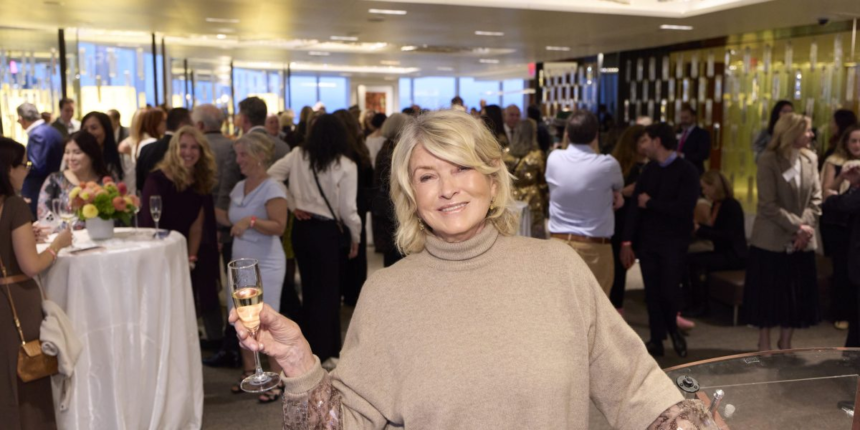
In a marketing blitz, Stewart—America’s first self-made female billionaire and a pop culture figure whose appeal has endured for decades—has made the media rounds this fall, appearing on the Today show to discuss her book while cooking mushroom and Tuscan tomato soups for sweater-weather season. There are also collaborations: Fans can buy seven of the desserts from Stewart’s book at Crumbl Cookies stores.
Under Sequential’s stewardship, the brand failed recover its previous cachet. Sequential went out of business after bankruptcy proceedings ended in 2022, but a former executive who spoke anonymously because they still work in the industry said the company made the mistake of attempting to saturating the retail market with Stewart’s brand. “The company wanted Martha Stewart’s name on every single product category from picture frames to sneakers to face cream,” the executive said. With a lifestyle brand meant to evoke aspirational entertaining, that indiscriminate strategy undermined the narrative of curated or special products, the veteran exec added.
Golden told Fortune that the company mines nostalgia, but it also invests heavily in consumer data and updates products and marketing for more modern tastes. “We love our 19 brands like we love our children,” said Golden. Along with nostalgia, consumers crave authenticity, and Martha Stewart has it in spades, he said.
Social media has completely changed the way companies create interest and demand. “We’re in the want business,” said Weber. “We’re in the business of creating a craziness in you to go out and buy something new.”
Under ABG, Brooks Brothers launched some secondary, lower-priced clothing ranges called “diffusion” lines, Saunders said, but the clothes were “a little bit shabby.” For the nostalgia play to work, the products still have to be good and the price has to be right, said Saunders. “No one will buy into a brand or buy products from a brand just because there’s an element of nostalgia,” he said. (Catalyst has not responded on the record to a request for comment.)
The mechanisms of decline are subtle but cumulative, and customers usually feel it before anyone inside a company will admit it, said Zuccali. “The leather seems thinner; a zipper catches; buttons look fine in photos but feel cheap in the hand,” he said. “Once trust breaks there, it’s really hard to get back.”
Any kind of quality degradation can alienate a brand’s most valuable customers, said Gabriella Santaniello, founder of brand consultancy A Line Partners. And some—especially the wealthier older customers who have personal allegiance to particular brands—are difficult to win back. “Gen X is the most likely to be disappointed in you if you’re a brand,” said Santaniello. “And they’ll hold a grudge—it’s harder for them to move on.”
Andy Cohan, co-CEO and co-founder of ACI, said Badgley and Mischka’s departure won’t change the brand all that much. ”We’ve adopted and maintained their point of view and their brand positioning on a go-forward basis, with a goal of taking the brand and really extending it.”
But founder transitions like the one at Badgley Mischka are always uncertain, said Zuccali. “Their brand has such a specific sense of proportion and movement that it’s hard to put into guidelines,” he said. “But in a year, maybe 18 months, we’ll know whether the collections still have that recognizable handwriting, or if they start shifting toward something more generic. I’m hoping for the former.”
Brand management companies are adamant that they are evolving these brands and setting them up for long-term success. Golden, CEO of Marquee, said the growth in licensing businesses has occurred during the past decade and collective volume “will only grow from here.” The model is acquisitive and competitive enough for bidding wars over prized names, and Marquee will likely buy at least two to three brands each year, he said.
The reality, said Golden, is that the fragmented, geopolitically complex world today makes it challenging for traditional brand companies and standalone brands to scale globally. He added that even the strongest companies are “looking to offload brands to us in an effort to extend their runway.”
The difference boils down to continuity, Dunn said, noting that WHP kept on some technical design employees who have been with Bonobos for more than a decade. “Those factors around talent and heritage and investment, that can vary widely,” said Dunn.
Dunn said it has a certain irony—if you care about the product, money will follow but the problem comes when you only care about the money. “Money has faces,” said Dunn, quoting one of his mentors. “All money looks the same, but it’s different depending on who you take it from. In this brand management world, that’s true as well.”
Glenn McMahon, former CEO of the luxury fashion brand St. John Knits and AG Jeans who also held senior executive roles at Giorgio Armani, Dolce & Gabbana, and other brands, has watched the tension among brands and brand management companies play out for decades, and he says he thinks the industry is poised for new life. “People used to say brand management companies are where brands go to die,” he said. “That’s changed.”