Brody Franzen is showing me his missiles and his comically large American flag. His company Furientis, operates out of Lenny Kravitz’s old studio in Los Angeles. He puts his head next to two mach three (three times the speed of light) nose cones that are browned like toasted marshmallows. “That’s from the supersonic flow hitting the nose,” he says.
Franzen is the cofounder and CEO of Furientis, a defense startup that emerged from stealth with $5 million in pre-seed funding, Fortune learned exclusively. Silent Ventures led the round with participation from Bessemer Venture Partners, SV Angel, Vanderbilt University, Channel 39 Ventures, and the founders of companies including Anduril and Armada.
But it’s production, not price, that’s the real problem. In the 1990s, there were more than 50 defense “primes”—the manufacturers that build complete weapons systems. Today, there are five. In ship-borne interceptors, there’s one. “Our adversaries, like China, are claiming the capacity of building thousands of anti-ship cruise missiles per week,” he says. “The math just doesn’t make sense from a production standpoint.”
His answer is to build ship-based interceptor missiles like cars, or better yet, IKEA furniture. Furientis uses automotive-style materials, automotive-style assembly processes, and commercial off-the-shelf components—rather than the “exquisite” bespoke hardware that’s made legacy interceptors expensive and slow to produce. The cost comparison is $250,000 per Furientis missile compared to the $1 to $5 million missiles built by most primes. Franzen’s target: 1,000 missiles per year, per factory, starting with a 9,000-square-foot facility in Los Angeles.
And while traditional primes spend a year or more doing computer modeling before their first hardware test, Furientis runs four-week design cycles with monthly flight tests. The company also makes its own solid rocket motors in-house, a capability that most primes outsource, and one that Franzen argues is where the whole supply chain bottleneck actually lives.
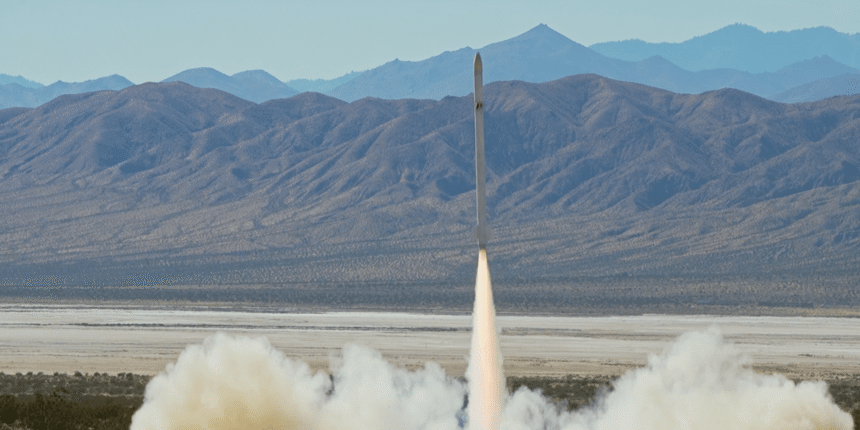
Franzen told me to look for “some really significant demonstrations” of their product later this year. He sent me a sneak peek of their most recent test of Furientis’ F 1.0 (the missile’s working name). The first seconds of the aerial video were eerily still before a line of white smoke erupted from the ground and sliced through the sky.
See you tomorrow,