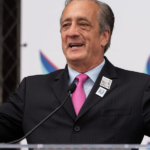
In the future, Elon Musk sees humans as metaphorical vegetable farmers.
“My prediction is that work will be optional. It’ll be like playing sports or a video game or something like that,” Musk said. “If you want to work, [it’s] the same way you can go to the store and just buy some vegetables, or you can grow vegetables in your backyard. It’s much harder to grow vegetables in your backyard, and some people still do it because they like growing vegetables.”
“In those books, money doesn’t exist. It’s kind of interesting,” Musk said. “And my guess is, if you go out long enough—assuming there’s a continued improvement in AI and robotics, which seems likely—money will stop being relevant.”
“There would be no shortage of goods or services,” Musk said at last year’s conference.
Tesla did not immediately respond to Fortune’s request for comment.
“We’ve been at it making machines forever, since the industrial revolution, at scale,” Marinescu told Fortune. “We know from economics that … you often run—for these kinds of activities—into decreasing returns, as it gets harder in order to make progress in a line of technology that you’ve been at, in this case, for a couple of centuries.”
AI is progressing rapidly, she said. Large language models can be applied to myriad white-collar careers, while physical machines, which she said are necessary in automated labor, are not only more expensive, but highly specialized, contributing to the slowdown in their workplace implementation.
Then there’s the matter of what these sweeping changes in labor will mean for the millions—or possibly billions—of people without jobs. Even with an established need for a universal basic income, finding the political willpower to make it happen is a different issue, said Samuel Solomon, an assistant professor of labor economics at Temple University. He told Fortune the political structure supporting the transformed labor force will be just as important as the technological one.
“AI has already created so much wealth and will continue to,” Solomon said. “But I think one key question is: Is this going to be inclusive? Will it create inclusive prosperity? Will it create inclusive growth? Will everyone benefit?”
Ironing out the complicated logistics of a work-optional world is one thing. Figuring out whether that’s something humans really want is another.
“If the economic value of labor declines so that labor is just not very useful anymore, we’ll have to rethink how our society is structured,” Anton Korinek, professor and faculty director of the Economics of Transformative AI Initiative at the University of Virginia, told Fortune.
Musk offered his own take on the existential future of humans at Viva Technology last year.
“The question will really be one of meaning: If the computer and robots can do everything better than you, does your life have meaning?” he said. “I do think there’s perhaps still a role for humans in this—in that we may give AI meaning.”