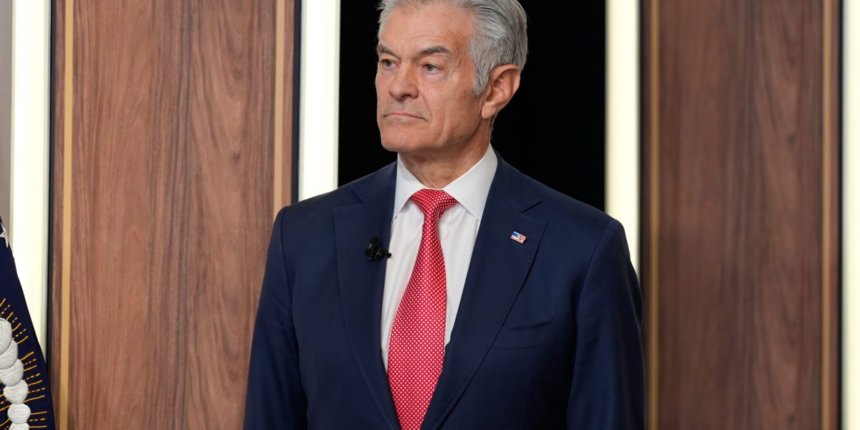
“Not all illnesses are equally dangerous and not all people are equally susceptible to those illnesses,” he told CNN’s “State of the Union.” “But measles is one you should get your vaccine.”
Asked in the television interview whether people should fear the measles, Oz replied, “Oh, for sure.” He said Medicare and Medicaid will continue to cover the measles vaccine as part of the insurance programs.
“There will never be a barrier to Americans get access to the measles vaccine. And it is part of the core schedule,” Oz said.
But Oz also said “we have advocated for measles vaccines all along” and that Kennedy “has been on the very front of this.”
Critics of Kennedy have argued that the health secretary’s longtime skepticism of U.S. vaccine recommendations and past sympathy for the unfounded claim that vaccines may cause autism may influence official public health guidance in ways contrary to the medical consensus.
Oz argued that Kennedy’s stance was supportive of the measles vaccine despite Kennedy’s general comments about the recommended vaccine schedule.
“When the first outbreak happened in Texas, he said, get your vaccines for measles, because that’s an example of an ailment that you should get vaccinated against,” Oz said.
The Republican administration last month dropped some vaccine recommendations for children, an overhaul of the traditional vaccine schedule that the Department of Health and Human Services said was in response to a request from Trump.
Trump asked the agency to review how peer nations approach vaccine recommendations and consider revising U.S. guidance accordingly.
Kennedy’s past skepticism of vaccines has come under scrutiny since Trump first nominated him to lead the Department of Health and Human Services.
Samoan officials later said Kennedy’s trip bolstered the credibility of anti-vaccine activists before the measles outbreak, which sickened thousands of people and killed 83, mostly children under age 5.
Oz’s comments mark a broader pattern among administration officials of voicing discordant and at times contradictory statements about the efficacy of vaccines amid an overhaul of U.S. public health policy.
Officials have walked a fine line in criticizing past U.S. vaccine policy, often at times appearing to express sympathy for unfounded conspiracy theories from anti-vaccine activists, while also not straying too far from established science.
During a Senate hearing Tuesday, Jay Bhattacharya, the director of the National Institutes of Health, said no single vaccine causes autism, but he did not rule out the possibility that research may find some combination of vaccines could have negative health side effects.
But Kennedy, in Senate testimony, has argued that a link between vaccines and autism has not been disproved.
He has previously claimed that some components of vaccines, like the mercury-containing preservative thimerosal, may cause childhood neurological disorders such as autism. Most vaccines for measles, mumps and rubella do not contain thimerosal. A federal vaccine advisory board overhauled by Kennedy last year voted to no longer recommend thimerosal-containing vaccines.
Administration public health officials often cite the need to restore trust in public health systems after the coronavirus pandemic, when vaccine policy and the general public health response to the deadly pandemic became a highly polarizing topic in American politics.
Misinformation and conspiracy theories about the public health system also spread during the pandemic, and longtime anti-vaccine activist groups saw a swell in interest from the wider public.
Kennedy, who for years led the anti-vaccine activist group Children’s Health Defense, has been criticized for ordering reviews of vaccines and public health guidelines that leading medical research groups have deemed settled science.