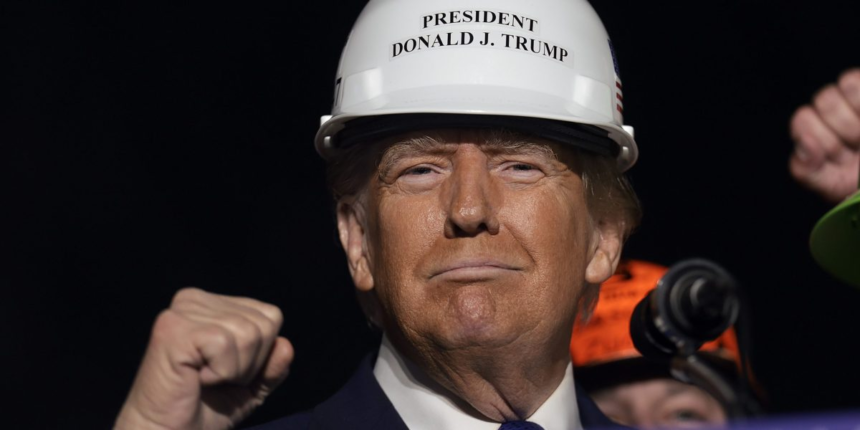
The shrinking manufacturing opportunities, meant to be a balm for domestic labor woes, are ironically a result of Trump’s whipsaw tariff policy intended to restore factory jobs, according to Laura Ullrich, director of economic research at the Indeed Hiring Lab.
“It is striking how soft manufacturing has been because in theory, you put tariffs in place to protect domestic manufacturing, so that domestic manufacturing employment grows,” Ullrich told Fortune. “And we have seen the opposite of that.”
“Oftentimes when there is heightened uncertainty, it’s just difficult for businesses and people to make decisions in real time,” she said. “And so that slows down employment. It slows down all those processes.”
“When you tax the intermediate goods, that’s going to manufacturers directly,” Ullrich said. “That’s part of what we’re seeing.”
“Some of the declines in blue collar employment could be about labor demand going down,” Ullrich said. “But it also could be about labor supply shortages and a mismatch between the skills the jobs that are available and the skills that people have to fill those jobs.”
It could be, then, that despite fewer manufacturing opportunities out there today, pursuing trade skills could be valuable in finding a job. Enrollment in trade schools and programs have been on the rise across the country, a sign young people are not giving up on manufacturing jobs anytime soon.