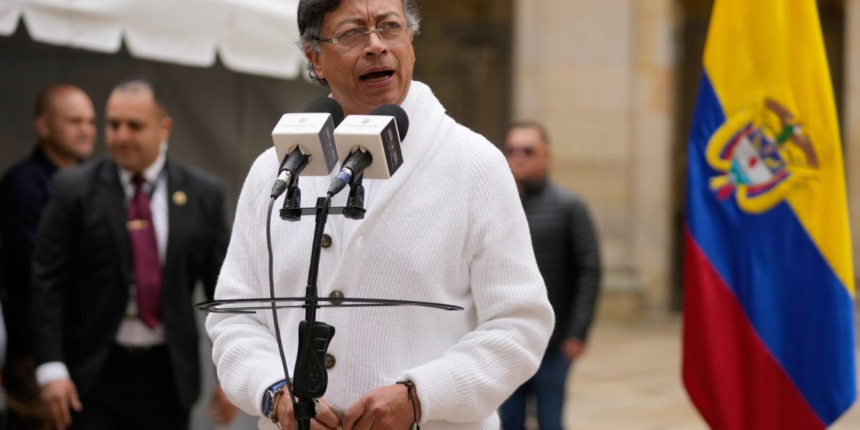
The “priority target” label is reserved for suspects DEA deems to have a “significant impact” on the drug trade. It’s unclear when the DEA gave Petro that designation.
Colombia’s Embassy in Washington downplayed what it called “unverified” and anonymous reports of preliminary law enforcement investigations against Petro.
“The reported insinuations have no legal or factual basis,” the embassy said in a statement.
In recent months, prosecutors in Brooklyn and Manhattan have been questioning drug traffickers about their ties to Petro and specifically about allegations the Colombian president’s representatives solicited bribes to block their extradition to the United States, according to one of the people who weren’t authorized to discuss the ongoing inquiry and spoke to The Associated Press on condition of anonymity.
The person said it wasn’t clear whether federal prosecutors have implicated Petro in any crime.
The investigation is focusing at least in part on allegations that representatives of Petro solicited bribes from drug traffickers at the Colombian jail La Picota in exchange for a promise that they not be extradited to the U.S., one of the people said.
U.S. federal prosecutors declined to comment. The DEA did not immediately respond to a request for comment.
The federal inquiry was reported earlier Friday by The New York Times.
The inquiries into Petro are in the early stages, and it is not clear whether they will result in charges, according to another person familiar with the matter, adding the White House has had no role in the investigations.
Ecopetrol President Ricardo Roa vehemently denied the allegations in a statement to AP, saying they “lacked all reality or logic.”
Petro, a former rebel leader, soared into office promising to reduce the country’s dependence on fossil fuels and reallocate state resources to addressing entrenched poverty.
Colombian authorities have for years been investigating members of Petro’s family for possible criminal acts.
The president’s brother, Juan Fernando Petro, has also been implicated in secret negotiations that allegedly took place with imprisoned drug traffickers to shield them from extradition to the U.S. in exchange for their disarmament.
The now defunct urban guerrilla group Petro belonged to, the 19th of April Movement, has long been suspected of taking money from Escobar’s Medellin cartels as part of its deadly siege of the Supreme Court in 1985. Petro did not participate in the attack, which left several guerrillas and around half the high court’s magistrates dead. Leaders of the group have always denied any links to the cartel.