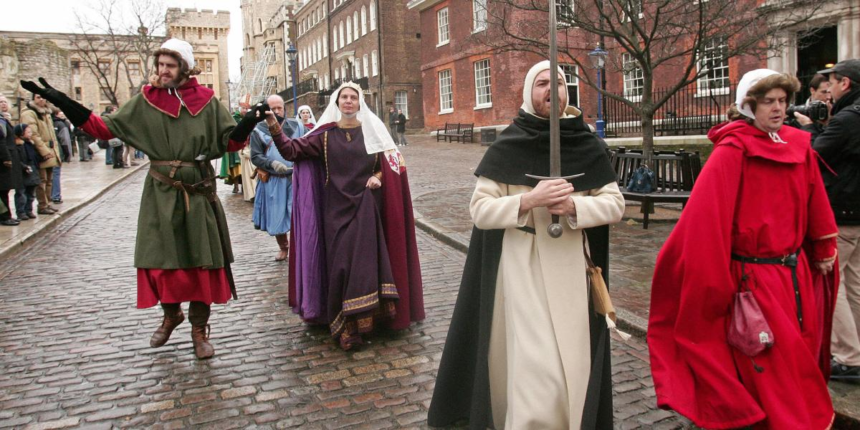
For all their hard work, peasants had a fair amount of downtime. Add up Sundays and the many holidays, and about one-third of the year was free of intensive work. Celebrations were frequent and centered around religious holidays like Easter, Pentecost and saints’ days.
But the longest and most festive of these holidays was Christmas.
The party was just getting started.
In return, a lord provided his peasants with protection from bandits or invaders. They also provided justice via a court system and punished people for theft, murder and other crimes. Typically, the lord lived in the village or nearby.
Peasants did not have privacy as we think of it; everyone often slept in one big room. Parents made love with one another as their children slept nearby. Married couples shared a bed, and one of their younger children might sleep with them, though infants had cradles. Older children likely slept two to a bed.
Life certainly wasn’t easy. But the stretches of time for rest and leisure were enviable.
Today, many people start thinking about Christmas after Thanksgiving, and any sort of holiday spirit fizzles by early January.
In the Middle Ages, this would have been unheard of.
Christmas itself was known for feasting and drunkenness – and it lasted nearly six weeks.
Many people today gripe about the stresses of the holidays: buying presents, traveling, cooking, cleaning and bouncing from one obligation to the next. There’s a short window to get it all done: Christmas Day is the only day many workplaces are required to give off.
Meanwhile, I’ll be dreaming of a medieval Christmas.