The One Big Beautiful Bill Act “did not help Social Security,” Shedden explained, agreeing with projections showing insolvency is drawing closer and closer as tax cuts keep bringing a reckoning nearer to the present day.
Still, she argued the situation is retrievable.
“I’m an optimist. I have studied Social Security now for over 15 years, and I know it is so complicated, but the advantage of that is there are so many rules and calculations that there are many, many little tweaks that can be made,” she said.
It comes down to political will to fix the problem, and Shedden admitted that is not a given, with the picture clouded by worsening economic inequality. The One Big Beautiful Bill has made it so the “very, very few at the very top gain more and more tax advantages, wealth, and…the lower and middle class aren’t really seeing a benefit.”
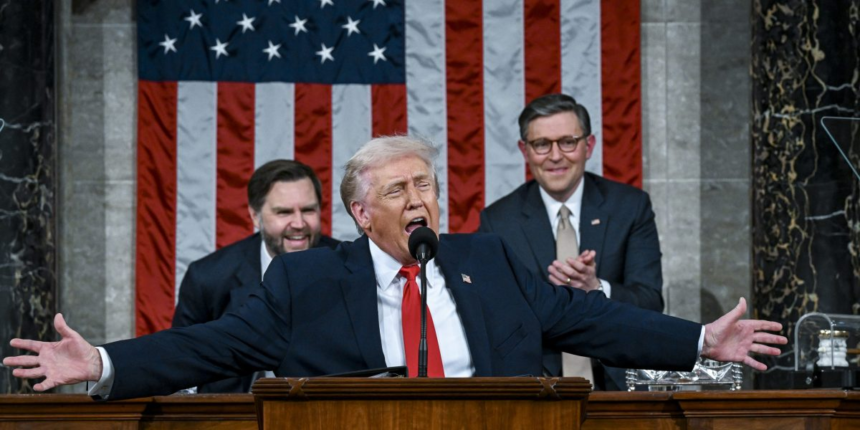
Political rhetoric often further complicates the picture. Shedden pointed to Trump’s recent mention in the State of the Union about doing away with federal taxation of Social Security benefits. While this sounds appealing to retirees on the surface, she warned it would be a catastrophic mistake. The taxes collected on these benefits go directly back into the trust funds, she explained, and eliminating them would “just further increase the time that we’re going to need to cut benefits.” Furthermore, she noted the tax advantages in such bills often exacerbate wealth inequality, primarily benefiting the very top earners while offering little to the lower and middle classes.
Shedden explained her own pivot to advocacy was born out of frustration with this widespread lack of financial literacy. She realized even financial professionals failed to grasp the program’s nuances, which prompted her to become a chartered retirement planning counselor and eventually to cofound NARSSA. The organization’s mission is to train professionals to help Americans optimize their claiming strategies using specialized software, ensuring retirees confidently understand their options before ever setting foot in a Social Security Administration office.
“Messaging is a huge issue with Social Security,” she said. The baby boomer generation largely started working in their teens, and “it was never explained to us that what this program really is, which is a large national insurance program that we all contribute into.
“Our employers match that contribution and it’s providing four different insurances: It’s loss of a job, it’s survivor life insurance, it’s disability insurance, and it’s medical insurance, Medicare…It’s hundreds of thousands of dollars in everyone’s retirement years,” she continued. “And for couples or high earners, it’s often over a million dollars just depending on their life expectancy.”
Shedden also noted the bipartisan commission to save Social Security in 1983, when former Democratic House Speaker Tip O’Neill and President Ronald Reagan created a safe space to come up with a compromise. When asked if she can see such a bipartisan approach taking place today, she admitted: “Well, not right today…I think that whoever is part of that solution will be so historically important.”
Ultimately, Shedden said she views Social Security not just as a government program, but as a massive financial asset offering guaranteed, cost-of-living-adjusted lifetime income. It provides crucial protections, including disability, survivor, and medical insurance.
Armed with education and historical optimism, this baby boomer CEO is determined to ensure the program remains secure for generations to come.
“This is a 90-year-old program,” she said. “It’s the backbone of most Americans’ retirement security. It’s not going away. It can’t go bankrupt.” Unless, somehow, it does.