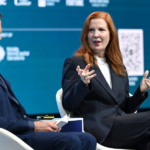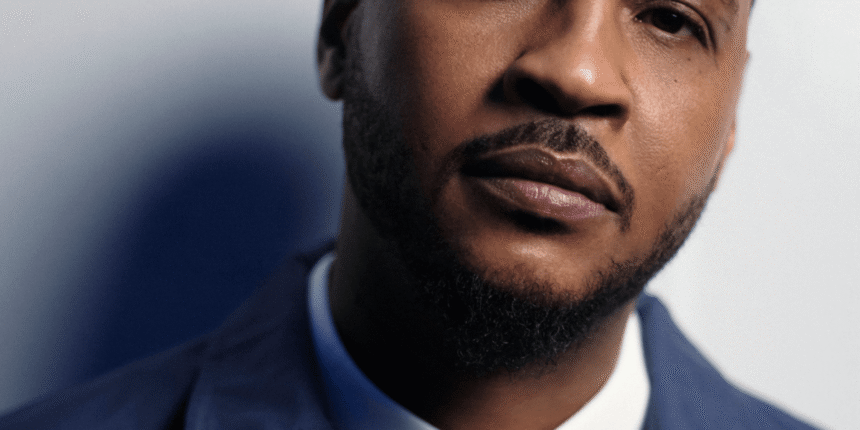
“That’s the pinnacle, that’s the end-all or be-all right there,” Carmelo Anthony told Fortune. Even though he was a top recruit at Syracuse University and a top-three draft pick before an All-Star career studded with Olympic Gold medals (three, to be exact) and a top 10 spot on the NBA’s all-time scoring list, Anthony insisted he never expected Hall of Fame status. “No, not at all. Not at all. I never, never thought that.” He said reaching the Hall of Fame is “something that’s just so far-fetched,” and something that he considered “damn near impossible to accomplish.” He emphasized that he prizes humility and has carried this over into his business career.
D. Watkins, co-author of Anthony’s memoir, said Carmelo was “very adamant about anchoring the experience at the Pratt, because it’s a free library. No tickets. No reservations required.” He said it was important to Anthony that the exhibit be at a space where everyone is welcome and can be comfortable. Their book together, Where Tomorrows Aren’t Promised, is a New York Times bestselling author, detailing the stories of Anthony’s upbringing and the odds he overcame to make it to where he is today.
The same humble, aspirational spirit that fueled Anthony’s long pursuit of Hall-of-Fame status underpins the exhibit. “This isn’t just an exhibit—this is my story,” Anthony said. “I want people to feel inspired to dream big and know it’s possible.” Social justice and equality continue to serve as the throughline for Anthony’s endeavors, including his work as co-founder of The Social Change Fund, which was created in response to the continued racial injustice across our country and aims to support critical and timely issues impacting the Black community.
Baltimore Mayor Brandon M. Scott praised Anthony for his humility and giving back to his community. “No matter what higher heights he reaches, he always stays grounded in his values and committed to supporting the next generation—especially young people following his footsteps in Baltimore.”
Anthony spoke to Fortune about the evolution of athlete empowerment, his business philosophy, and the financial lessons he hopes to pass to the next generation of sports stars. Anthony, who recently achieved one of basketball’s highest honors with his induction into the Hall of Fame, described the experience as the “ultimate feeling.”
“It was something that we really sat down and we whiteboarded it out, and we talked about it, and we had multiple meetings, just trying to figure it out.” Most importantly, he said, he started to learn the industry of tech investing through learning fundamentals of the business, the language and having various meetings and conversations. “I really wanted to just be a student at first, before I just go out there and invest some money.”
More recently, he admitted to a similar hesitancy around cryptocurrency. “Years ago, I’m like, I want to try this. I want to get into it. And everybody’s like, ‘Man, don’t mess with that crypto, leave it alone, don’t mess with it.”‘ He said “something about this new wave of currency” really appealed to him, but it was just hard to convince people “who didn’t really understand that whole crypto world and what it was doing, and where it was going.”
Despite quick turnaround concerns in startup investing, Anthony said his focus was always on the people behind the companies, seeking passionate founders he could truly believe in. He also said that, while he’s never received overtly bad business advice, the best lessons often came from observing the poor decision-making of others—a philosophy that’s kept him both cautious and innovative.
Still, Anthony was ambivalent about whether he’d wish to have the same NIL rights for himself when he was in college over 20 years ago. Saying that he thinks “it’s tough” to be a college athlete with modern pressures, he added, “No, I don’t think I would have wanted to deal with the stresses of [NIL rights]. You know, worrying about, when is my check coming in? And the check didn’t clear?”
Perhaps most passionately, Anthony offered guidance for young athletes entering the professional ranks, including his own son, who is on his way to collegiate and potentially pro basketball. “You’re never too young to understand what’s going on,” Anthony advised, emphasizing the importance of paying attention not just to social media or sports, but to financial literacy and the details of one’s own contracts and investments. He encouraged taking ownership early, being actively involved in decisions, and seeking out knowledge independently.
Asked about what he’d learned about business from his days interacting with NBA owners, Anthony was too gracious to name anyone in particular, but said that owners who “are not afraid to listen” and “not afraid to change their perspective” were particularly impressive to him. “Obviously, they’ve [already] got the best advice,” he said. “If they’re billionaires, they did something right. Above all, he said he admires leaders who understand the importance of knowing when to “step in and when to step out,” respecting the intricate relationships between athletes, teams, and their broader communities.