Canva, the Australian startup that’s won over 265 million users with its design software, is launching a new suite of tools that combine visual creation and workflow automation, run by AI agents that respond to conversational prompts
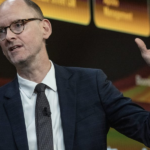
“We had to rearchitect the whole Canva platform,” Cliff Obrecht, Canva’s co-founder and chief operating officer, tells Fortune.
Obrecht describes Canva’s previous AI services—generating images and video, or generating a whole presentation—as “a design platform with AI services built on top.” With these new services, Canva hopes to go beyond design to offer more coworking capabilities for users.
For example, the new Canva can crawl the web for breaking tech news overnight, determine what’s trending, then create—and even schedule—social media posts on its own. “It can help you complete your whole job,” Obrecht says.
Canva’s massive user base has pushed the company to think carefully about how to offer AI services without blowing a hole in its budget. “There’s only so long you can fund your user base with VC-funded dollars,” he says. “With 265 million users on a monthly basis hammering our services, we have to own our models and we have to own infrastructure that serves our models.”
These investments have helped Canva produce its own foundational AI models, rather than solely relying on models from third parties. The startup claims that its AI services are seven times faster and 30 times cheaper than “comparable” frontier models. Obrecht adds that Canva is also trying to explore how to tap device processing power for AI, rather than go into the cloud.
Canva will offer multiple tiers for pricing. Free users will get access to Canva’s basic AI, with a small number of credits for premium models. Pricing then escalates through different tiers all the up to $100 a month, which Obrecht describes as “almost all-you-can-eat”—even if there are still some limits on Canva’s most powerful models.
Software-as-a-service companies have been hit hard in recent months by investor fears about competition from AI developers like OpenAI, Google and Anthropic. Design software developers are particularly threatened by AI, as ChatGPT and Claude increasingly take on the ability to generate video and images.
Obrecht notes that, despite the so-called AI scare trade, Canva’s shares are still trading at its last valuation of $42 billion, reached during an employee stock sale last year. “We’ve fortunately avoided being hit by that SaaS apocalypse,” he adds.
But he’s aware that rapidly changing technology can pose a threat to Canva if executives aren’t careful. “If we’re not going to disrupt ourselves, then we’re going to be disrupted,” he says.