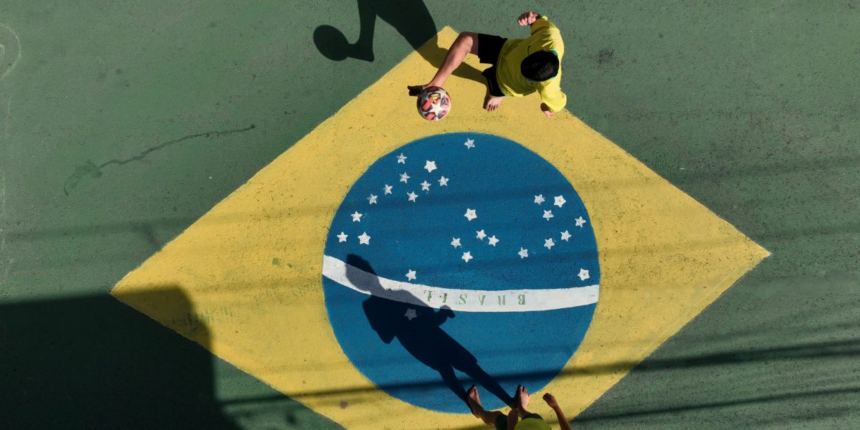
Forget about the exclusivity of traditional over-the-air networks: The World Cup will be watched differently this time.
The goal is to grab viewers’ attention, effectively giving them an appetizer that will encourage them to go back and watch the games on traditional channels.
FIFA took notice, and four years ago did a type of a test run with popular streamer Casimiro Miguel, now 32, who had shown success engaging with younger sports fans on his Twitch channel. For the 2022 Qatar World Cup, FIFA reached a deal with him — and his partner LiveMode — to broadcast 22 matches on the CazéTV YouTube channel.
“FIFA is always looking at innovative ways about how to enhance the broadcast coverage of our flagship competitions and the deal with CazéTV is an example of such, which will ensure football fans in Brazil will be able to watch all 104 games, while also helping to reach new audiences and demographics,” the governing body told The Associated Press in a statement.
LiveMode, the Brazilian company that has CazéTV under its umbrella and broadcasts matches with content creators, announced last month that it had launched an international broadcast arm of the company and that Cristiano Ronaldo was one of its shareholders.
“There is an audience that connects with digital first, and digital allows us to bring this new audience to follow major sporting events,” LiveMode co-founder Sergio Lopes told the AP. “Generally, this audience is younger and doesn’t just want to watch a match. They want to participate in the conversation, interact in real time, and feel like they are part of a community.”
“YouTube is where global sports fans tune in before, during, and after the game. That is what makes our preferred partnership with FIFA for World Cup 2026 so unique,” said Angela Courtin, YouTube’s vice president of entertainment and sports marketing. “Between the incredible reach of our creator cohort and providing FIFA’s media partners with a pathway to upload more premium content to their YouTube channels, plus our live YouTube FIFA Creator Cup in New York City this July, we are ushering in the next generation of soccer fans for years to come.”
With the new deals, FIFA expects the 2026 World Cup to break all records related to digital and streaming audiences.
“We are seeing that sport needs to occupy all screens, engage with all audiences to grow,” LiveModeTV co-founder Lopes said. “New audiences expect authenticity, interaction and different ways to follow an event. The World Cup continues to be the greatest sporting spectacle on the planet, but the way to experience it is also becoming more social, more participatory, more accessible, and more connected to the digital habits of each generation.”