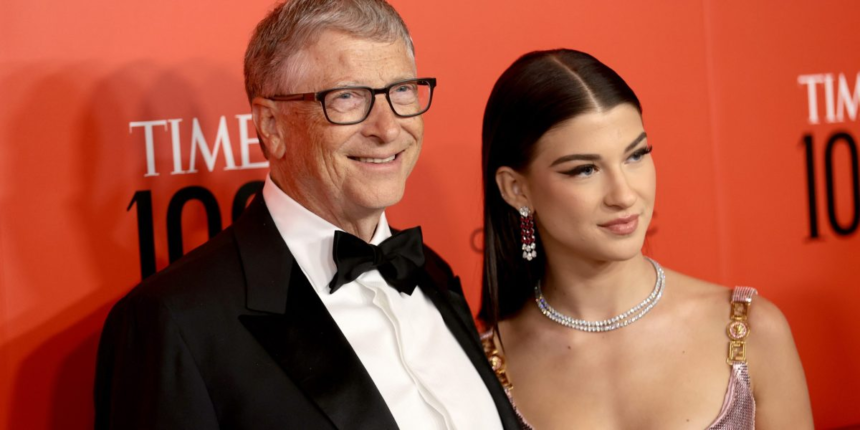
A high-profile figure himself, Gates has seen scrutiny extend to his family. His daughter Phoebe, in particular, has struggled with being harassed online.
“Hearing my daughter talk about how she’d been harassed online, and how her friends experienced that quite a bit, brought that into focus in a way that I hadn’t thought about before,” Gates—a father of three—continued.
An internet meme is an image or video, usually intended to be humorous, that is spread online.
“We have context where we want correct information, like hopefully when we want medical advice,” Gates said. “But then we kind of like, in our community and enclave, have these shared views that kind of pull us together.”
He explained: “Even I will wallow. Let’s say there’s a politician I don’t like, and there’s some article online criticizing him a little bit. I’m like, ‘Oh, that’s such a good critique, [and] I enjoyed reading it, even if it was exaggerated.’”
Gates said in the interview: “We should have free speech. But if you’re inciting violence, if you’re causing people not to take vaccines, where are those boundaries? Even the U.S. should have rules, and then if you have rules, what is it? Is it some AI that encodes those rules? You have billions in activity, and if you catch it a day later the harm is done.”
This isn’t the first time Gates has proposed the emerging technology as a tool against misinformation and deepfakes (images and videos which are incredibly realistic but are not authentic).
“It won’t be a perfect success, but we won’t be helpless either.”
It seems misinformation may just be another of many topics on which the billionaires will have to agree to disagree.
More on Bill Gates:
A version of this article was first published on September 5, 2024.