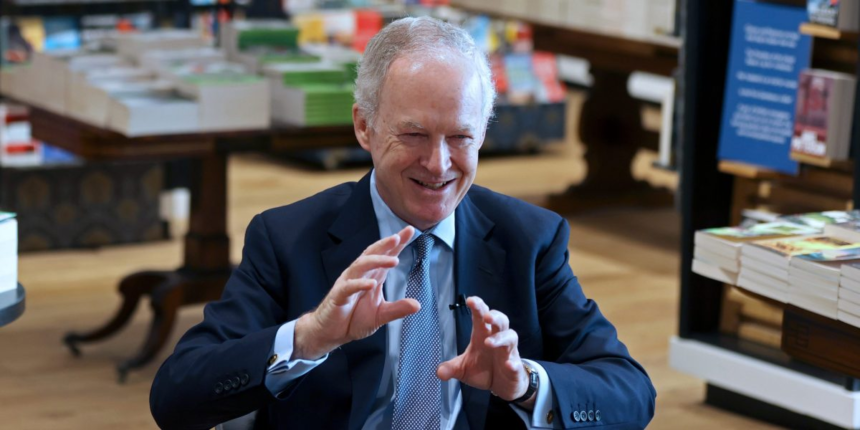
Barnes & Noble CEO James Daunt wants to set the record straight on his views on AI-generated books.
“I have actually no problem selling any book, as long as it doesn’t masquerade or pretend to be something that it isn’t, and that it has an essential quality to it, and that the customer, the reader, wants it,” Daunt told Today’s Jenna Bush Hager. “So as long as an AI-written book says it’s an AI-written book and doesn’t pretend to be something else and isn’t ripping off somebody else—as long as that’s clearly stated and the customer wants to buy it—then we will stock them.”
In Daunt’s eyes, his comments were far from an endorsement of using AI to pen manuscripts. Instead, he clarified in an email to Fortune, Barnes & Noble has taken steps to avoid selling content written by large language models, even though it will not outright prohibit sales of AI-generated content.
Rather, Daunt said banning a certain subset of books could be a slippery slope in debates around what entities are responsible for restricting AI content and why. No reputable publisher would choose to release an AI-generated book, he said, meaning it would be unlikely for Barnes & Noble to stock those books.
“Our position is that we do not sell AI books, as far as we are aware; we take active measures to exclude all AI-generated books from our online catalogue and never knowingly order any for stocking in our stores; and we demand that publishers label any books that are AI-generated,” Daunt told Fortune. “This is a straightforward rejection of AI books.”
Daunt’s own refusal to prohibit the sale of AI-generated books is less about the technology than it is about wanting to avoid engaging in the knotty conversation about banning books. A potential prohibition of AI-generated books would require a set of standards that would be difficult to identify, let alone enforce, Daunt claimed. For example, would Barnes & Noble refuse to sell only books 100% written by AI, or those more than 50% AI-generated? According to the CEO, the responsibility to just what is AI-generated should come from a publisher, not a bookseller. Moreover, he said, there may be a time when consumers demand AI-generated books, such in the case of computer coding manuals. Rather than have a prescriptive policy, Daunt suggested drawing a line in the sand on AI books is not Barnes & Noble’s role.
“This would take a days-long conference to explore, and suggests further to us that our position is one of common sense,” Daunt said.
“While some implementations of AI justify extreme caution—such as autonomous military technology with the power to wage war—a risk-based approach acknowledges that most AI applications,” Inserra wrote, “especially those involving speech and expression, should be considered innocent until proven guilty.”
“AI can be used to supercharge censorship, surveillance, and the creation and spread of disinformation,” Michael J. Abramowitz, president of Freedom House, said in a statement on the report. “Advances in AI are amplifying a crisis for human rights online.”