Closed schools. Work-from-home demands. Price caps.
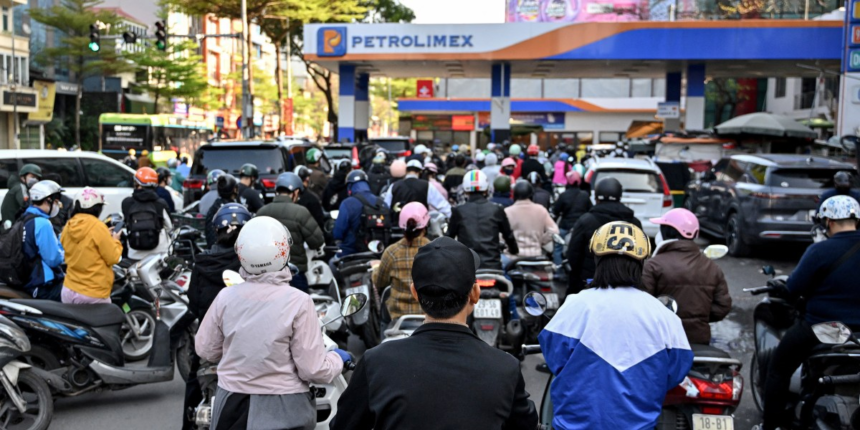
Asia’s governments are scrambling to manage a fuel shortage caused by high oil prices and a closed Strait of Hormuz. Asia is particularly dependent on oil exports from the Middle East; Japan and South Korea respectively source 90% and 70% of their oil from the region.
The energy crunch is forcing governments to adopt more extreme measures to save fuel.
Asian countries are also intervening more directly into fuel markets.
Oil prices have had a volatile few days. WTI crude prices surged to over $115 per barrel on Monday, only to swing back and forth as competing statements emerged from Washington. WTI Crude is now past $90 per barrel, as of Wednesday evening.
Flows from the Middle East are still constrained, with the Strait of Hormuz effectively closed to maritime traffic. “While oil reached $150/bbl [per barrel] in inflation-adjusted terms during the 2022 Russia/Ukraine crisis, this situation could prove more severe…supply volumes at risk this time are dimensionally bigger—and real,” wrote Wood Mackenzie analyst Simon Flowers in a research note. “In our view, $200/bbl is not outside the realms of possibility in 2026.”