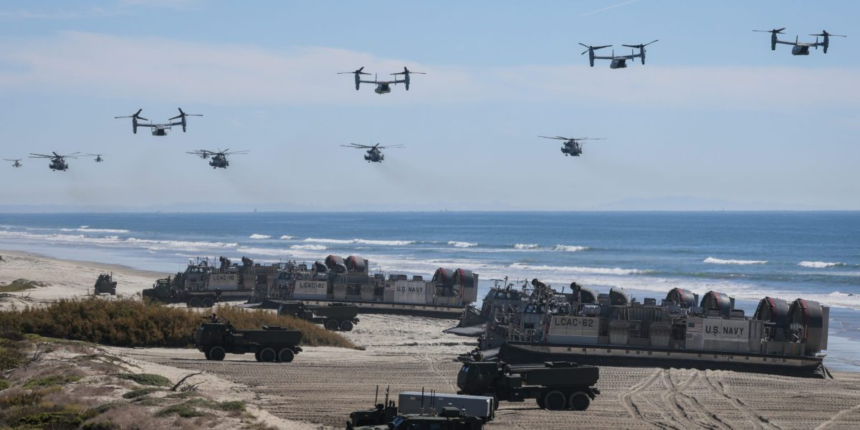
A potentially decisive showdown to wrest control of the Strait of Hormuz away from Iran is taking shape, with thousands of U.S. Marines headed for the Middle East.
President Donald Trump upped the ante over the weekend by vowing to destroy Iranian power plants if the strait isn’t reopened by Monday. Iran responded by threatening to target critical infrastructure around the Gulf, including desalination plants that provide most of the region’s fresh water.
U.S. troops could be deployed to areas along the strait to clear out threats to ships in the narrow waterway, which has been largely been closed by attacks from the Iran’s Islamic Revolutionary Guard Corps.
Marines could also land on Kharg Island, which sits farther north along the Persian Gulf coast and is the hub for 90% of Iran’s oil exports. U.S. control of the island could be used a leverage to pressure Tehran to fully open the Strait of Hormuz.
But experts have pointed to the risk ground troops would face in holding any territory, given that Iran has inflicted significant damage on U.S. military bases and embassies throughout the region as swarms of projectiles overwhelm air defenses.
For now, the U.S. military is continuing to pound the Hormuz area in anticipation of the next move, whatever it will be. Apache helicopters and the vaunted A-10 Thunderbolt aircraft have been targeting what remains of Iran’s naval capabilities, such as fast attack boats, while bombers have also destroyed stockpiles of anti-ship missiles.
Analysts have raised another possibility that could avoid putting boots on the ground: a naval blockade that prevents Iranian oil from reaching its destination.
The idea is to turn the tables on Iran and subject it to the same shock that closing the strait has delivered to its oil-producing neighbors, who have slashed their output while their crude has nowhere to go.
While he has been skeptical that the U.S. Navy has enough ships to escort all the tankers that typically transit the Strait of Hormuz, he said it has the resources to blockade Iran’s oil exports.
Removing more supply from global oil markets should send prices even higher, but Brooks argued crude might do the opposite if a U.S. blockade is seen ending the war quickly.
China, which buys most of Iran’s oil, would be incentivized to lobby Tehran to reopen the strait, and a blockade of Iran’s exports would deprive the regime of hard currency needed to prop up its war machine, he added.
Richard Haass, the former president of the Council on Foreign Relations and a longtime national security official, made a similar argument for a blockade this past week.
He proposed an “Open for All or Closed to All” policy that he believes has the best chance to resolve the Hormuz crisis. The veteran diplomat also dismissed naval escorts and ground troops as too difficult.
Blockading Iran’s oil exports would require setting up a 200-mile-wide defensive line across the Gulf of Oman, using ships, aircraft, and drones, Haass said.
He added that the policy would deny Iran its main source of revenue and impose domestic pressures to accept a ceasefire—or risk a larger challenge to the regime’s authority. Any increase in oil prices would also be modest as a blockade would remove relatively small amounts of Iranian oil from the global market.