Most venture capital firms get their start in Silicon Valley. It took Antler almost a decade to open its first office there.
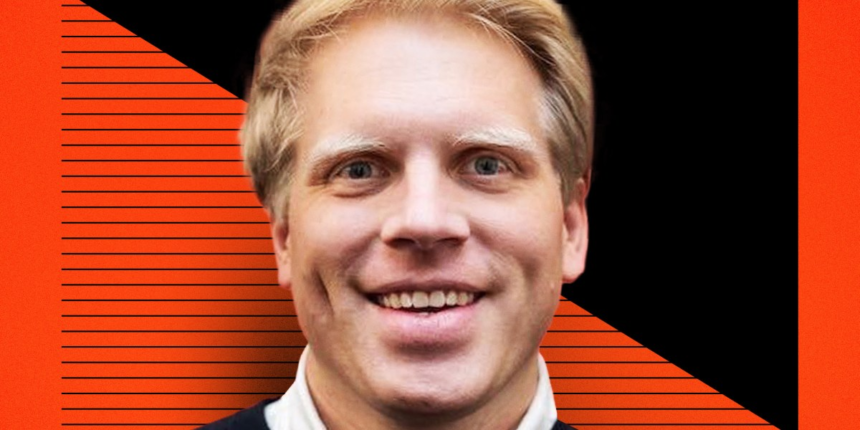
“Silicon Valley is still the biggest ecosystem in the world,” Antler’s Norwegian founder Magnus Grimeland said at the VC firm’s Singapore headquarters. But Grimeland’s late entry into Silicon Valley reflects his firm’s approach on building a venture capital firm. “People can innovate from almost anywhere, and at a level they weren’t able to before.”
Eight years after its founding, Antler has expanded to 27 cities across six continents, with more than 1,500 investments and more than $1 billion in assets under management. In 2024, Pitchbook deemed it the world’s most active venture capital firm. Last year, Antler made more than 400 investments, roughly one every 22 hours, and raised $510 million in new capital, including a $160 million U.S.-focused fund closed in December.
Antler’s model is simple: Find brilliant people before they start a company, then help them build one. And while Antler has a limited track record—none of its portfolio companies have launched an IPO—Grimeland thinks a global footprint and an AI application boom is going to set his VC fund up for success.
Southeast Asia was a trial-by-fire for Grimeland. “The region has hundreds of millions of people, hundreds of thousands of islands, a little bit of corruption and fraud, and everyone uses cash,” Grimeland says. “We thought we were starting a tech company, but instead we ended up building physical infrastructure like warehouses and roads.”
Zalora became a training ground for a whole host of other startup founders. Kevin Aluwi and Nadiem Makarim, co-founders of the Indonesian ride-hailing app Gojek, are Zalora alumni. Michele Ferrario, Zalora’s group CEO, founded StashAway, a Singaporean wealth management startup. Other Zalora executives founded ShopBack, a consumer rewards startup.
Grimeland eventually jumped ship himself, founding Antler in 2017. “Our ambition was to be the first investor into the world’s greatest talents, no matter where they come from or what their background is,” he explains.
Antler positioned itself as a “day zero” investor, meaning it backs founders from the very start, before they’ve even started building their businesses. The firm’s flagship residency program gives founders up to $400,000 in initial investment and access to a network of mentors and advisors.
Not everyone sees Antler’s aggressive and widespread funding as an asset. Some observers, uncharitably, have called it “spray and pray”; essentially, arguing that venture funds like Antler invest in everything and hope that something works out.
Grimeland pushes back against such critiques. “It’s hard to get the flywheel off the ground, but then you learn to do things better,” he acknowledges, adding that “the first fund Antler raised was completely based on personal relationships, plus my own money from the Zalora sale.” He now claims Antler raises more money each week than it did during its first year. The firm raised $510 million in 2025 alone.
That being said, Antler is considering moving past its lane of funding founders that are just getting started. “Moving forward, we want to launch a growth vehicle where we can continue to back people all the way to their IPO or exit,” he says.
At the heart of Antler’s global presence is Grimeland’s belief that innovation is increasingly decentralized, and founders can be found anywhere. The firm now covers more than 20 cities across six continents; Grimeland thinks there’s still room to expand to as many as five new locations (which would bring its footprint to around 35 offices).
For Grimeland, that means a firm without a global on-the-ground presence will always lose out. “We see VCs flying from the rest of the world to Jakarta, Ho Chi Minh City, or Manila, but they’d always end up investing in the third or fourth best founders,” he says. “The firms with on-the-ground operations know who the strongest founders are, and those founders gravitate toward them.”
Yet while future unicorns can be found in any part of the world, Grimeland says that founders need to have a global mindset from day one. “There was a period of time where you can just focus on building regional companies that become really big,” he says. “But if you look at the biggest companies we have in our portfolio now, they’re the ones that are winning globally.”
Antler now sees Africa as a growth area for tomorrow’s startups. The fund opened an office in Nairobi in 2019, and in Lagos in 2025. When Antler launched on the continent, it received 5,000 applications which eventually got whittled down to its first cohort of 40 founders.
Grimeland thinks Africa looks like Southeast Asia a decade ago, with a “tremendous number of people who want to build.”
“People have been talking about Africa for a very long time, but now it feels like the fundamentals of the economies are growing very rapidly,” he said. “Antler can provide access and capital, and when we do that, people build incredible companies.”
Artificial intelligence, which Grimeland calls the “biggest opportunity” he’s ever seen, is Antler’s next big swing.
Lovable is probably Antler’s greatest success so far. The European vibe-coding startup hit $100 million in annual recurring revenue just eight months after its founding; a recent funding round in December helped make co-founder Fabian Hedin, at 26, Europe’s youngest self-made billionaire.
Most of the biggest deals around AI have focused on infrastructure, whether foundational model developers like OpenAI or Anthropic, or data center operators. But Grimeland thinks the bigger opportunities will come from companies that build compelling applications on top of that infrastructure.
Grimeland says founders need to get into AI while the space is still nascent. Today’s entrepreneurs can build startups that solve all the easy problems–and then as the tech matures, the next generation of founders will be stuck with “very complex stuff where deep experience matters.”
“I have a lot of friends who spend an extraordinary amount of time talking about things they’re very passionate about, and really seem to want to do something about it,” Grimeland says. “But then, 20 years later, they’re still working at Goldman Sachs.”