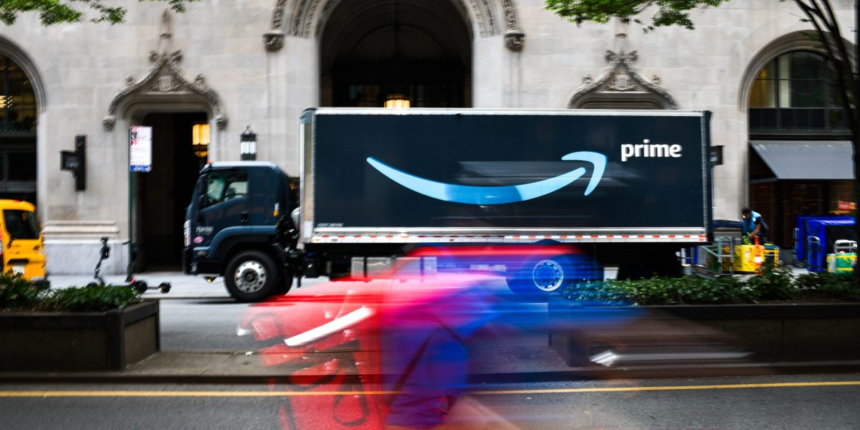
This is the third consecutive year Amazon has adjusted Prime Day’s timing in response to external economic pressure — moving it earlier, stretching it longer, and loading it with more urgency-driven messaging. What began as a made-up holiday to sell Prime memberships is being quietly reengineered into a preemptive consumer defense mechanism — the institutionalization of the panic-buy.
Fear-buying follows a distinct economic logic that inverts the conventional relationship between anxiety and spending. In a stable economy, consumer confidence drives purchases — people spend when they feel secure. But tariff-driven inflation introduces a specific and rational distortion: when consumers expect prices to be higher tomorrow than today, spending now becomes the prudent choice.
Making the spending picture murkier: a significant and growing share of Prime Day purchases are being financed.
Taken together, the Prime Day 2026 data paints a portrait of a consumer base that is active but strained, spending but not splurging, and increasingly reliant on financial instruments — and retail events — to manage the gap between income and anxiety.
For this story, Fortune journalists used generative AI as a research tool. An editor verified the accuracy of the information before publishing.