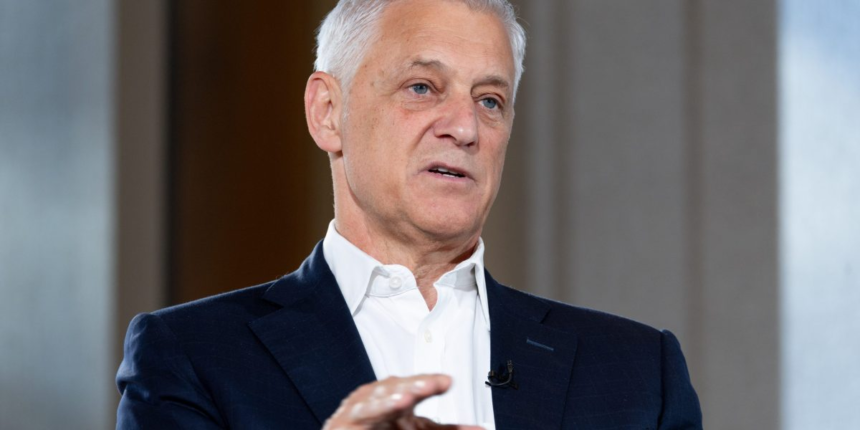
The finance leader first made the controversial comments at an investor briefing in Hong Kong last Tuesday, saying: “[AI] is replacing, in some cases, lower value human capital with the financial capital and the investment capital we’re putting in.”
And while Winters had also added that the company is giving staffers “every opportunity to reposition” and reskill, labeling some workers as less valuable in the tech revolution quickly sparked criticism.
As it turns out, the CEO’s attempt to clarify his stance didn’t land, drawing hundreds of reactions to the post.
Some commenters called out the harm in automating roles deemed lesser than, with one user writing: “‘Taken out of context’ is the oldest deflection in the book. If you’re cutting 15% of your workforce, the ‘building skills for new opportunities’ line doesn’t land—it insults people’s intelligence.”
Others voiced their disappointment over his word choice, but appreciated his transparency on the issue. “This is a conversation every organisation will eventually have to face,” another person commented.
So Winters swooped in with another post explaining himself again. That same day, the CEO published the full transcript of his comments in an attempt to contextualize the situation. And this time, he acknowledged and apologized for the upset caused by his choice of words.
In a comment to Fortune, a Standard Chartered representative highlighted Winters’ commitment to revamp the workforce into a skills-forward company. The business said it will also offer future opportunities for “higher skill, long-term employment” in and outside of the global bank.
“Standard Chartered has, for many years, invested actively in helping colleagues whose roles may be displaced by automation to build the skills needed for new opportunities within our organisation,” the representative said. “That is what a responsible employer should do, and our track record in supporting internal transitions is strong. We will continue to act responsibly in helping our people to succeed.”
There is no shortage of companies cutting roles, decreasing headcounts, and slowing hiring in the face of the AI revolution. However, some who have been outspoken on automation were met with public backlash.
His comments were met with swift backlash, and just one week later, the CEO walked back the statement by adding “more context.” The cofounder said that Duolingo is helping its staffers “feel empowered and prepared to use the technology,” while adding that the tech won’t overtake the work of humans.
In late 2023, his perspective was set into motion at the $6.4 billion fintech company when Klarna halted hiring; by letting natural attrition run its course, the company’s workforce shrunk by around 1,000 staffers by 2024, which reportedly saved the business around $10 million annually using AI for marketing needs, cutting back on lawyer time, and optimizing communications.
The company cut at least 4,000 of its customer support roles for AI agents to pick up the work, and cited that when it comes to Salesforce’s business interactions, around “50% are with agents, 50% are with humans.”
While onlookers may gawk at the idea of tech being their new coworkers, Benioff said this AI-human workforce is nothing dystopian: “This is reality, at least for me.”