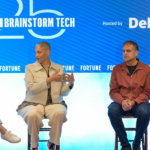
On Thursday morning in New York City, Dr. Shiv Rao stood before a room of health system executives and made a case that ambient AI—a technology that began largely as a transcription tool—was ready to do something far more consequential than writing a doctor’s notes.
The company’s platform captures conversation between patients and doctors in real time and automatically generates the clinical note, billing codes, and patient summary before the doctor has left the hallway. What’s new is everything that flows from that moment.
Before the visit, Abridge surfaces care gaps and prior clinical context for the clinician. During the encounter, the tech suggests discussion topics and surfaces relevant clinical guidelines without requiring the physician to switch applications. After the visit, it generates the documentation, flowsheets, and orders—all grounded in the actual words spoken.
“We’ve known all along we wanted to be able to connect the dots across the main stakeholders in healthcare, because the only thing that matters, I think, in terms of AI’s impact on healthcare is business model innovation.” Rao told Fortune. “If we can’t actually improve how healthcare is delivered, how it’s experienced, and how it’s paid for, then we haven’t really moved the needle on the problem.”
“For us, the most important first priority that we would love to explore, that we are working to explore with them, is around clinical trials,” Rao said.
“Now the priority is how much impact can we create, and speed is everything, so I think for the foreseeable future we’re just going to focus on the algorithm,” Rao told Fortune.
Beneath it all is a deeper governance question. Abridge is now positioning itself as neutral infrastructure connecting providers, payers, and life sciences companies through some of the most sensitive data in medicine: the conversation between a sick person and their doctor.
Whether that trust holds, at scale, is an untested hypothesis.