They weren’t trying to write a political story, not really.
But read against the backdrop of what just happened in New York City this week, the paper looks less like a policy brief and more like a forensic explanation of a political earthquake nobody in the Democratic establishment saw coming.
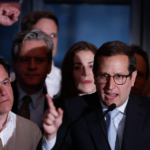
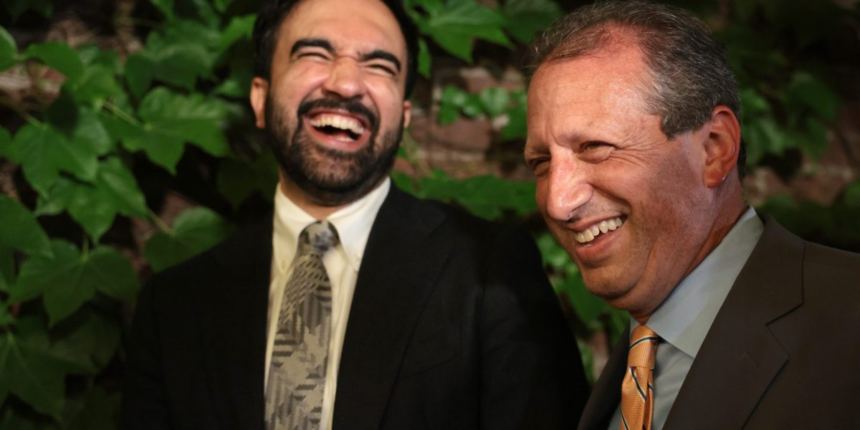
On Tuesday night, New York City Mayor Zohran Mamdani — the democratic socialist who shocked the Democratic Party by routing Andrew Cuomo in last year’s mayoral race — completed one of the most striking primary sweeps in recent memory. Mamdani-endorsed candidates defeated entrenched Democratic incumbents across multiple congressional districts, with at least a dozen candidates aligned with the Democratic Socialists of America winning statewide. The Democratic Party’s establishment wing, still struggling to explain Mamdani’s rise, is now scrambling to explain his reach.
New York County — Manhattan — registers among the highest AI automation exposure scores in the nation, according to the report. Between 14% and 19% of workers there are employed in occupations where AI is not just theoretically capable of handling their tasks, but is already doing so — automating rather than merely assisting.
The methodology, which draws on actual usage data from Anthropic’s Claude models, counts full automation at twice the weight of human-AI collaboration, making it a deliberate measure of displacement risk rather than productivity gain.
That is the electorate that made Zohran Mamdani mayor. And this week, it voted his way again.
The uncomfortable truth embedded in the Brookings analysis is that the workers with the most rational reason to fear AI disruption are not factory hands in Ohio. The cognitive, nonroutine, information-based tasks that define white-collar urban work — conducting research, writing code, drafting presentations, preparing analyses, creating marketing content — are precisely the task categories where AI models perform best and are most actively deployed.
The more educated and “office-based” the job, the paper finds, the more involved it is with AI. And those jobs concentrate overwhelmingly in Democratic-leaning metros: the 62 most AI-exposed blue counties account for 75% of the population of the top 100 most AI-exposed counties in the country.
These are not working-class voters in the traditional sense. Many of them have college degrees, decent salaries, and strong opinions about their economic futures. They are, by most political taxonomies, exactly the kind of “professional class” Democrats that the party has spent decades courting. But as a separate academic study cited by the Brookings authors found, Democrats are both more likely to use AI and more likely to hold jobs with higher AI exposure than Republicans. Being the party of AI adoption and the party of AI anxiety are turning out to be the same thing.
Mamdani understood this intuitively before the economists wrote it down.
High-exposure blue counties flagged explicitly in the Brookings report as potential political flashpoints include Jefferson County in the Denver area, Hennepin County in Minneapolis, and King County in the Seattle area. At the state level, Massachusetts, New York, California, and Washington, D.C., all register AI exposure levels between 13% and 17% of workers — and all are trending toward the kind of working-class-coalition politics Mamdani is now actively exporting beyond New York.
The Brookings authors reach back to economist Jed Kolko’s research on industrial automation to make the same point in more measured academic language. A decade ago, Kolko showed how manufacturing job anxiety reshaped the politics of red counties; Muro and his co-authors warn that AI exposure “may turn out to be a source of economic and social concern especially in blue counties and states going forward.” They conclude with a line that reads, in retrospect, like a forecast of Tuesday’s results: “America’s bluest counties may become hotbeds of some of the AI era’s most agitated voters.”
They published that on June 3. The votes came in on June 24, with a Mamdani clean sweep.
The most AI-exposed, most economically anxious, most politically restless voters in America live in blue cities — and they are already telling you exactly how they plan to vote. You’ve just been missing the reason for it.