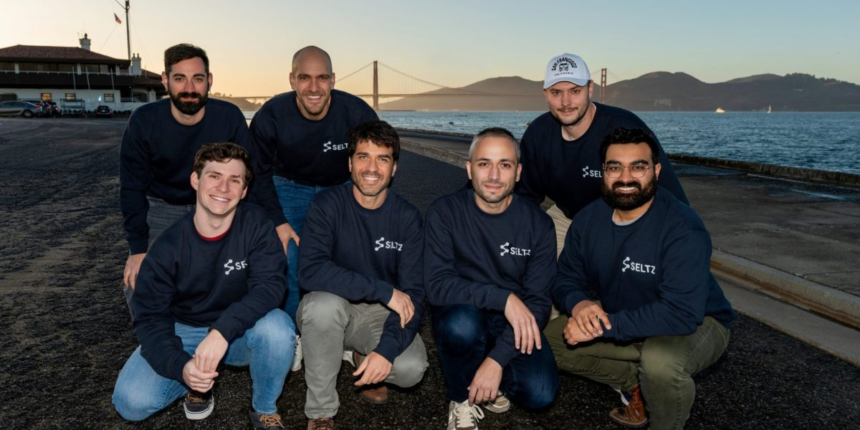
Seltz founder and CEO Antonio Mallia said traditional search engines were designed for people typing short keyword-based queries and then skimming a list of ranked links. AI agents work differently. They fire off long, precise queries—some “research agents” send dozens or hundreds of queries in parallel—and they need machine-ready information they can cite, not a snippet designed to entice a human to click through.
“The old search methods don’t work because they were architected for humans,” Mallia told Fortune. “The information [the AI agent needs] is actually not in the snippet. It’s in the body of the web page, it’s in things like tables, images, and other forms of representation that can be useful for an LLM or for an agent.”
Mallia has been preparing for this moment for much of his career. His PhD. work in computer science at New York University focused on information retrieval, and he worked as an applied scientist on Amazon’s artificial general intelligence team and as a research scientist at the vector-database company Pinecone before deciding to found Seltz. He told Fortune the current moment reminds him of the early 2000s, when Google’s PageRank upended how search worked. “The revolution is back again,” he said—this time driven by transformer models and the AI workflows that increasingly do the searching themselves.
Seltz’s system crawls hundreds of millions of pages a day, and returns results in under 200 milliseconds. Instead of always handing back a full page or a summary, Mallia said, it scores individual passages and extracts the specific table, text, or image an agent actually needs—an exercise in what he calls context engineering.
Seltz, incorporated in the U.S. and founded last October, is a lean operation: it currently employs just 15 people, only a half dozen of whom are full time employees. The team, which works fully remote, is split between the San Francisco Bay Area and hubs near European universities in Pisa, Italy, and Leipzig, Germany. Mallia said many on the team hold Ph.D.s in information retrieval and he has recruited other veterans of Amazon’s AI efforts. Seltz’s advisers and angel investors include executives from Google, Ramp, Cohere, Synthesia, and Databricks, along with academics from information-retrieval labs at NYU and the University of Glasgow.
Seltz said the funding it has raised will go towards continuing to develop its search stack, hiring, and the start of an enterprise sales effort.