Gómez, a street vendor who sells water and soft drinks, introduced her family with pride and determination, presenting them as representative of countless other working-class Mexicans. “We are the working part” of Mexico, she said.
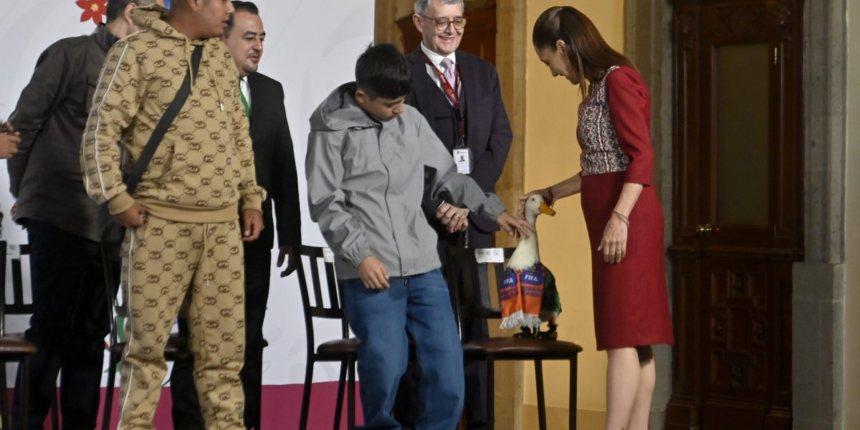
Sitting beside the lectern, with Merlín at the center, were her sons, Carlos, 22, and Cristian, 14, who “doesn’t rest after school” and helps her every day by selling goods and carrying packages.
Merlín, he said, is “the boss of our little business. He’s the one who follows behind us, making sure we’re working and doing things the right way.”
The family takes great care with his diet, feeding him small fish, crickets and, on Sundays, even a meat taco.
Gómez said she was moved by the way Merlín captured the hearts of World Cup fans.
“It has been the best thing that has happened to us in this life,” she said, though she noted that other ducks the family had owned also became local celebrities in Mexico City’s historic center, including Bruna, who wore tennis shoes.
Gómez said she believes the family went viral because people saw in them “a hard-working family, a family that gets up every day to make ends meet.”
The president eventually had to cut off questions to move the news conference along, but not before trying to pet Merlín and posing for a photo with the family.
Wildlife advocates also warned that the popularity of pets like Merlín can have unintended consequences. In a Facebook post, the Wildlife Rehabilitation Unit of Pachuca, a city about 90 kilometers (55 miles) north of Mexico City, cautioned that fame can fuel “impulse purchases and abandonment.”
“Animals do not need owners for fashion; they need responsible caretakers,” the government-run agency wrote.
Merlín, at least, appears to have found them.