“Iran must immediately stop their highly paid PROXIES in Lebanon from causing trouble,” Trump said on social media. “If they don’t, we’ll hit Iran very hard again, just like we did last week, only harder!!!”
Iranian state media said talks had entered a “difficult phase” and recessed after the “publication of an insulting message by the U.S. President.” The Iranian delegation then met with Qatari mediators and left the negotiating site, state media said.
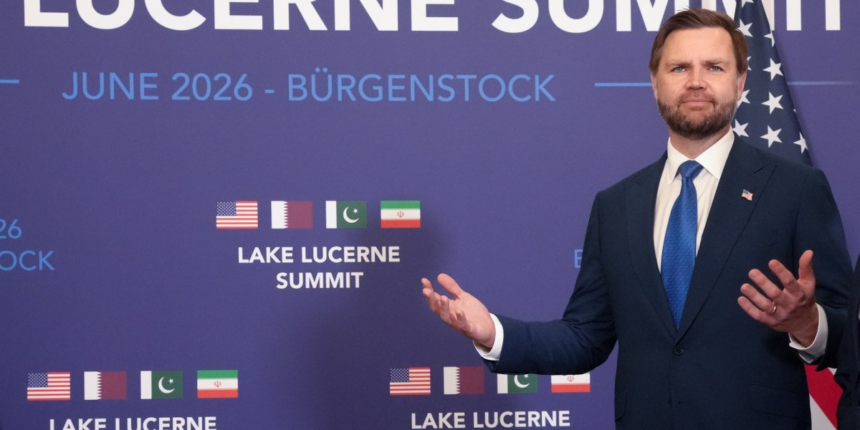
Vance and U.S. negotiators including Steve Witkoff and Jared Kushner, Trump’s son-in-law, had met with Qalibaf and Foreign Minister Abbas Araghchi for what Iranian state media said was about 80 minutes.
An official with knowledge of the talks later told the AP the Iranian delegation remained engaged in the talks and has not indicated to mediators any intention to leave. The official requested anonymity due to the sensitivity of the talks.
“The question before us now is how much more can we accomplish together? Can we turn over a new leaf?” Vance said as the talks began, and asked whether they could “change relations in the Middle East permanently.”
A renewed ceasefire in Lebanon, brokered on Saturday, appeared to be holding, and Israel’s military said it would lift movement restrictions for residents near the border with Lebanon on Monday morning — another sign of calm.
It also calls for Iran to dilute its stockpile of highly enriched uranium, believed to be buried under nuclear sites that were targeted in U.S. strikes a year ago.
Pezeshkian, however, declared Sunday that “we will never back down from the right to enrich uranium, and the other side is also forced to accept it,” according to Iran’s state media.
Iran had cautiously approached the talks given its previous experience with U.S. negotiations on the nuclear issue, which twice in the past year were interrupted by military strikes.
The new agreement says commercial vessels can pass through the Strait of Hormuz for 60 days without charge, but does not preclude future fees imposed by Iran. Trump made his own threat Saturday to levy U.S. tolls if there is no deal with Iran in 60 days, insisting that the money would be for “services rendered as the Guardian Angel to the countries of the Middle East.”
The Trump administration has been working to reassure global markets that the war has been merely a blip on oil prices, as Americans complain about high gasoline prices ahead of peak summer travel. After the deal was announced, oil futures dropped almost 8%.
Markets are expected to closely track the progress of talks when they open for trading Sunday evening.