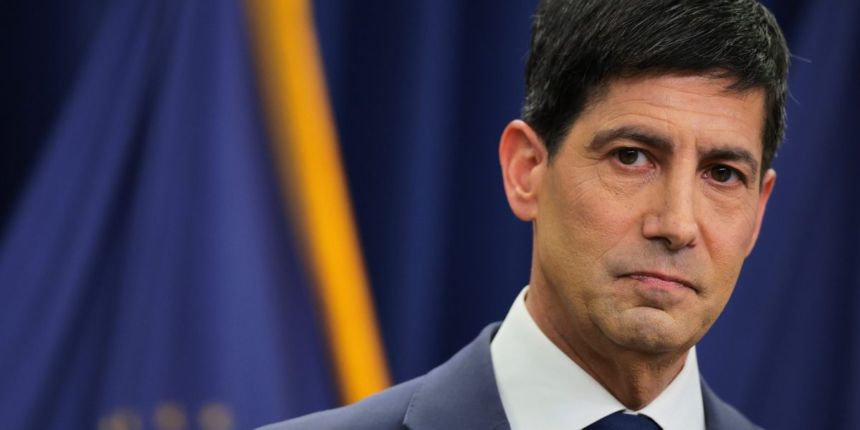
At his confirmation hearing, he criticized Jerome Powell’s Fed, saying the rate hikes of 2021–22 had contributed to the worst inflation in 45 years. Warsh’s confirmation ended up being the most politically divided in recent history; Sen. Elizabeth Warren accused him of acting as President Trump’s “sock puppet.”
But even as Warsh laughed off those complaints, there was no real way for anyone to know who would actually show up at the new Fed chair’s first press conference—until 2 p.m. on Wednesday, when the Federal Reserve released its policy statement. It was a bit glib, but definitive: “We will meet our price stability objective,” Warsh wrote, then repeated it again and again at his press conference. Inflation has been running above the Fed’s 2% target for five years. Warsh called that unacceptable and kept saying so. “The ‘two’ is the left of the decimal point,” he told reporters. “For now, ‘zero’ is to the right.”
To Jon Hilsenrath, the former Wall Street Journal reporter long known as “the Fed whisperer,” that settled it. When Warsh repeated the price-stability line, and when the committee wrote it into the statement, Hilsenrath said, “that was hawkish Kevin talking.”
But during the press conference, Warsh struck a different tone. Asked whether AI productivity gains still gave the Fed room to cut, he deflected to one of his new task forces. On inflation there was no such hedge. The commitment to getting back to 2%, he said, is “strong, unanimous, and unambiguous”—calling it “an important message we’ve missed for five years,” and one he vowed to fix.
Playing to the White House was clearly anathema for Warsh. Trump spent the past year escalating from threats to fire Powell to a full DOJ prosecution in his campaign for lower rates, and recently said Warsh should “do whatever he wants” and be “totally independent.” Asked if he’d spoken to the president, Warsh demurred: “On the president, I don’t have anything for you.” In the statement, he squarely blamed rising prices on the conflict in the Middle East.
The rest of the meeting had that politicians’ glint to it as Warsh cleared room to maneuver. It was less “regime change” and more “we’ll see.” He declined to submit his own dot to the Fed’s rate-projection plot, though he encouraged colleagues to keep theirs. He scrapped forward guidance—“I can’t give you any guidance on what we’re going to do next”—on the idea that markets work best if they just read the data themselves rather than guessing at the Fed. And he announced five task forces to reexamine the Fed’s communications, balance sheet, data sources, the labor-market effects of AI, and its inflation framework, all due by year-end. To Hilsenrath, the panels double as a stall, a way to answer hard questions with “we’ve got a task force for that” while he buys time.
But at the end of the day, when July rolls around, none of that is substituted for the decision itself. Warsh has built a 15-year argument on one premise—that inflation is a choice, and that the Fed forfeited its credibility by pretending otherwise.
“Now it’s his choice,” Hilsenrath said. “He’s the guy in charge.”