Europe spends less of its GDP on research and development than the U.S., Japan, or China. Its R&D intensity has held at roughly 2.1% for years, compared with 3.45% in the U.S. and Japan and 2.6% in China. Yet the continent continues to punch above its weight, generating world-class ideas and breakthroughs: the European Patent Office logged a record number of patent applications last year.
Together, the ranking paints a picture of a continent defined by deep industrial expertise, fresh ambition, and a capacity to reinvent itself. At a moment of rapid technological and economic change, these companies are helping shape Europe’s future.
Europe may lag behind the U.S. and China across much of the tech landscape, but it has assembled a formidable semiconductor ecosystem.
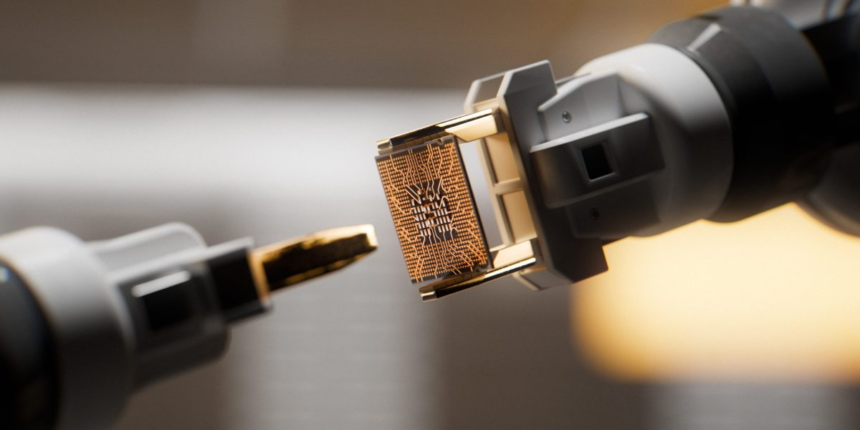
ASML is pushing the AI race forward with two breakthrough innovations. The first is the Twinscan XT:260, a specialized tool built for advanced chip packaging. The second is its High-NA EUV systems, machines that act like ultra-fine laser pencils, printing microscopic chip features that let tech giants pack record-breaking processing power onto a single silicon wafer.
The defining characteristic of this year’s ranking may be its longevity. Many of Europe’s most innovative companies are among its oldest.
The list spans 300 companies across 18 countries and 21 industries
If semiconductors are Europe’s technological backbone, Germany remains its industrial engine room. The country has more companies on the list than any other (a total of 56) with leaders spanning technology, automotive, engineering, and pharmaceuticals.
Germany’s economic model traditionally prioritized long-term investment over quick wins, contributing to to this innovative streak. Its network of Mittelstand firms (SMEs) and its dual system of vocational education and apprenticeships have produced a deep pool of skilled engineering talent, contributing to the region’s global competitiveness in highly specialized industries, from precision engineering to advanced chemicals.
While the country faces increasing pressure from labor shortages and rising energy costs, Germany’s industrial champions are adapting these traditional strengths to the digital age.
Europe may not dominate the tech race, but this year’s list proves it keeps producing the companies everyone else relies on. From the machines that make AI chips to the factories, networks, and materials powering the global economy.